How Many Hidden Faces Can You Spot in This Tree? Explore the Wonders of Pareidolia and Mind-Teasing Illusions
Unlocking the Mystery of Faces Hidden in Nature and Art
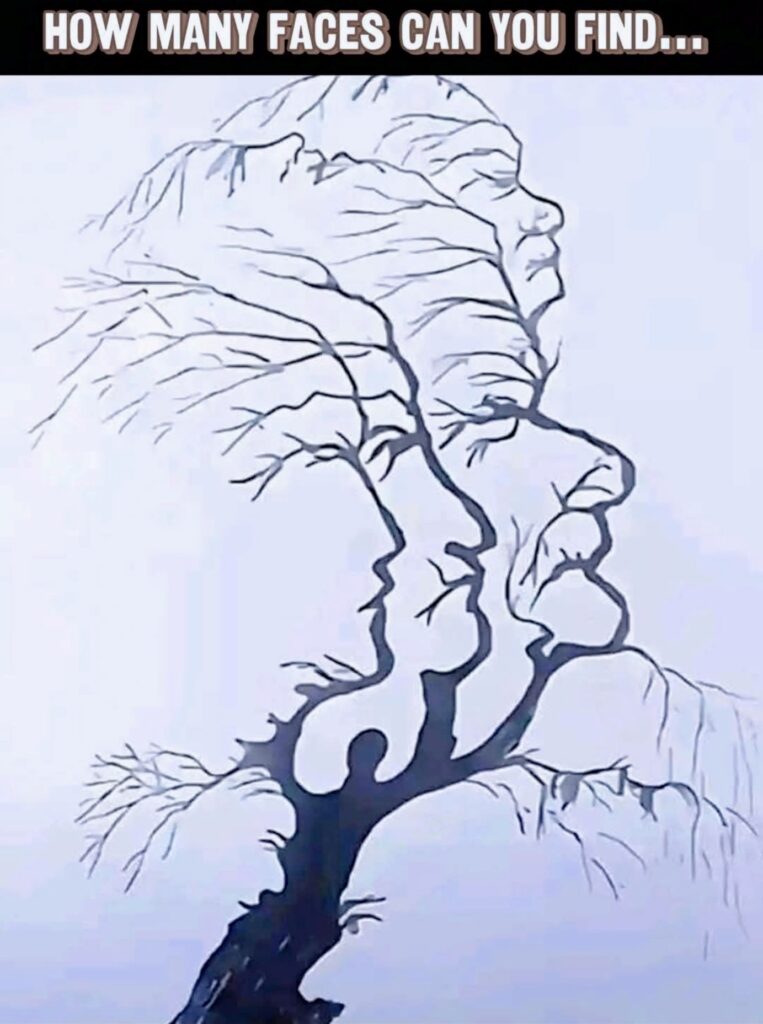
Ever stared at a tree and suddenly seen a face peeking through the bark or nestled among the leaves? That eerie, delightful moment when your brain insists, “That knot looks like an eye!” is thanks to a phenomenon called pareidolia—and it’s the enchanting force at play in this intricate tree illustration brimming with hidden faces.
In this feature, we’re diving deep into why our minds are drawn to these illusions, how they tickle our brains, and why they’re more than just fun—they’re cognitive goldmines. You’ll discover clever tips to spot every camouflaged countenance, learn the science behind why we’re wired to recognize faces in random patterns, and even get inspired to create your very own “face-in-a-tree” masterpiece.
So grab your magnifying glass (or just squint a little), and let’s wander together through a forest where branches whisper secrets—and faces are hiding in plain sight.
Why Our Brains Are Obsessed with Hidden-Face Puzzles
Ever find yourself staring at a tree, a cloud, or even a slice of toast, convinced you just saw a face? You’re not alone—and you’re not imagining things either. This fascinating tendency is called pareidolia, and it’s hardwired into us for a reason. Long ago, early humans needed to detect faces quickly—friend or foe, predator or prey—often in less-than-perfect visibility. To keep us safe, evolution favored brains that could spot a face in the blink of an eye, even if it turned out to be just a shadow or a swirl of leaves.
That instinct didn’t go away. Today, it shows up in delightful ways—like face-finding puzzles that hook our attention and tickle our brains. Every time we uncover a hidden face, our brain rewards us with a burst of dopamine—a tiny chemical high that keeps us scanning, hunting, and grinning. These puzzles also bring out our competitive and social sides: spotting “7 faces” and challenging a friend to beat you fuels connection and fun.
Cracking the Code: How Many Faces Are Hiding in the Tree?
At first glance, it’s just a tree—sturdy trunk, branching limbs, and sky peeking through the canopy. But take a closer look, and the illusion starts to shift. Curves in the bark mimic brows and chins, while forks in the branches double as cheekbones or parted lips. Every twist of wood and flicker of shadow might be more than it seems.
Look for profiles first—side views of faces are often the easiest to spot, especially where the main trunk curves like a forehead or jawline. Then examine the negative space—those patches of sky around the branches often shape the outlines of a hidden visage. Don’t forget the finer twigs; they might conceal youthful faces or expressions turned just so.
From wise elders etched in thick bark to subtle, almost whispering silhouettes among the foliage, these illusions are a playground for the brain. Some illustrations hide five, others a dozen or more. The true number? That depends on how sharp your perception is—and how far your imagination will go.
So, how many faces can you find?
Smart Strategies to Spot Every Hidden Face
Don’t just scan the image—investigate it like a visual detective. To maximize your face-finding success, approach the puzzle methodically:
- Divide and Conquer
Mentally break the image into zones—lower trunk, midsection, and upper canopy. Focus on one section at a time to ensure every nook gets your full attention. - Silhouette First, Details Later
Temporarily ignore textures and small elements. Instead, look for broad contours that resemble a face—forehead curves, nose bridges, jawlines. Big-picture thinking often reveals what the eye misses when it fixates on detail. - Change Your Angle
Our brains tend to latch onto one interpretation. Break that tunnel vision by tilting your head, squinting, or even flipping the image upside down. A fresh perspective often unlocks hidden figures. - Master the Negative Space
Sometimes, the face isn’t in the bark or branch—but in the empty sky between them. Watch how light gaps and shadows work together to outline features. - Track Your Finds
Whether mentally or with a light mark on a printed copy, keep track of the faces you’ve spotted. This keeps your search organized and helps avoid overlooking subtle profiles.
And don’t forget to celebrate every discovery—each “Yes!” moment fuels your curiosity and keeps the challenge exciting.
Pareidolia: The Brain Science Behind the Magic
Think spotting faces in trees is just a quirky game? Think again. Pareidolia is a fascinating cognitive phenomenon—and a window into how your brain processes the world.
Our visual systems are built for survival, not perfection. In split-second decisions, it’s safer to mistake a shadow for a face than to overlook a potential threat. This is why you might see a face in the clouds or a smile in a coffee stain—your brain is doing exactly what it evolved to do: find meaning in chaos.
Neurologically, the fusiform face area—a specialized region of the brain—activates even when we see faces that aren’t real. This lightning-fast recognition system helps us stay alert, connect with others, and stay safe.
But there’s more. Engaging in pareidolia puzzles can:
- Sharpen pattern recognition
- Enhance visual attention
- Offer light mental workouts
- Provide a calming, mindful break
Every time you pause to search an image, your brain is not just entertained—it’s being trained. The joy of discovery, the focus required, and even the social thrill of saying “I found 11!” all contribute to healthier cognitive function.
So the next time you see a face hiding in the bark or clouds, smile. It’s not your mind playing tricks—it’s your brain doing what it was built to do, beautifully.
Emotional and Social Benefits of Hidden-Face Puzzles
These illusions offer more than just a mental challenge—they connect us emotionally and socially. Sharing your face count with a friend or posting your discoveries online turns a solo puzzle into a shared experience:
“I found 9—did you see the old man hidden in the branches near the top?”
This simple exchange sparks conversation, invites fresh perspectives (someone else might spot what you missed), and fuels playful, low-stakes competition. In that moment, you’re not just solving a puzzle—you’re building community.
On an emotional level, hidden-face puzzles offer a mindful break from daily stress. The focused attention required to scan the image pulls you out of anxious thought loops and brings you into the present moment. That satisfying “Aha!” when you spot a new face? It delivers a quick hit of dopamine, lifting your mood and reinforcing curiosity.
In group settings—family gatherings, classrooms, team-building events—these puzzles become collaborative adventures, encouraging patience, observation, and collective problem-solving. Everyone sees something a little different, and together, the group uncovers more than any one person could alone.
How to Create Your Own Hidden-Face Tree Illusion
Inspired to try your hand at crafting one of these captivating images? Designing your own face-in-tree illusion is both creatively rewarding and surprisingly meditative. Here’s how to get started:
1. Start with a Strong Foundation
Sketch a basic tree silhouette—a trunk with sprawling branches. Keep it simple at first. You can draw it by hand or use digital tools like Procreate, Adobe Fresco, or even a vector-based app like Illustrator.
2. Scout Face Zones
Look for natural curves and intersections where facial features might emerge. A thick bend in the trunk could suggest a nose; a branch fork might mimic a chin or jawline. Lightly mark these areas as guides for your design.
3. Shape with Subtlety
Now refine the outlines—gently nudge the branch contours to suggest a forehead slope, the dip of an upper lip, or the roundness of a cheek. Subtlety is key. The magic lies in near-misses that the viewer’s brain resolves into recognizable features.
4. Use Negative Space Wisely
Sometimes the “face” doesn’t live in the branches at all—it hides in the gaps between them. Play with background contrast so that empty sky shapes suggest facial outlines just as effectively as the tree itself.
5. Add Layered Complexity
To boost puzzle depth, vary your hidden faces:
- Mix side profiles, three-quarter views, and even tiny faces tucked within larger ones.
- Include a range of expressions and ages to create visual variety.
6. Test and Tweak
Before finalizing, show your draft to a friend without any hints. Which faces do they see right away? Which ones elude them? Adjust contrasts, reshape curves, and fine-tune until you strike the right balance between obvious and elusive.
7. Reveal and Share
Present your finished illusion with a playful prompt:
“How many hidden faces can you find in this tree?”
Later, offer a key or checklist so solvers can compare notes. It makes for a fun social post, blog feature, or educational activity.
Applying Hidden-Face Puzzles in Education and Therapy
Hidden-face illusions do more than entertain—they’re powerful tools in both the classroom and therapeutic settings.
In Education:
Teachers use pareidolia-based puzzles to develop students’ observation skills, focus, and critical thinking. In art or psychology lessons, students can explore how simple shapes trick the brain into perceiving complex forms. This opens discussions around perception vs. reality—why we see faces, how the mind constructs meaning, and what that reveals about human cognition.
For younger students, these puzzles teach patience and systematic thinking. As they search each section of the image, they naturally practice skills applicable across disciplines: scanning carefully, breaking large tasks into parts, and staying attentive to detail.
In Therapy:
Therapists use ambiguous images like tree-face illusions to help clients externalize feelings and tap into subconscious thoughts. Asking “What do you feel when you see this face?” can lead to insights about emotion, projection, and identity. It’s a gentle, creative way to invite conversation—especially with clients who struggle to express themselves directly.
Whether used in group sessions or one-on-one, these puzzles become catalysts for reflection, storytelling, and emotional discovery.
Tips for Maximizing SEO and Engagement for Hidden-Face Content
If you’re publishing a blog, article, or resource centered around a tree-face illusion or similar optical puzzle, here’s how to boost discoverability, engagement, and sharing:
🔍 1. Strategic Keyword Integration
Include high-intent, relevant keywords naturally throughout your content. Examples:
- “hidden faces puzzle”
- “pareidolia tree illusion”
- “spot the faces in tree”
- “optical illusion brain teaser”
Place these in titles, subheadings, image alt text, and meta descriptions for maximum effect.
✍️ 2. Use Reader-Friendly, Searchable Headings
Make headings scannable and SEO-friendly. Try:
- How to Spot Hidden Faces in Tree Illusions
- Why Our Brains See Faces Everywhere
- Create Your Own Face-in-Tree Artwork
- Pareidolia in Psychology and Education
🗣️ 3. Keep the Tone Conversational and Personal
Engage your reader directly. Use personal pronouns and questions like:
“Have you spotted the face near the highest branch yet?”
This style builds connection and encourages readers to linger.
🖼️ 4. Embed Multimedia Thoughtfully
Include a high-quality image of the tree illusion with descriptive alt text, e.g.,
“Tree optical illusion with multiple hidden faces.”
If possible, offer an interactive version or printable download so readers can mark their finds.
🔗 5. Leverage Internal Linking
Point readers to related content to increase time-on-site and reduce bounce rates:
- “Explore more optical illusions that challenge your brain.”
- “Check out our DIY art tutorial on creating face illusions.”
- “Learn how cognitive puzzles can improve memory and focus.”
📣 6. Add Social Sharing Hooks
Encourage readers to spread the fun:
- “How many faces can you find? Tag a friend and compare counts!”
- “Think you’ve spotted them all? Post your number and challenge others!”
Use share buttons and hashtags like #HiddenFacesChallenge or #BrainTeaserTree.
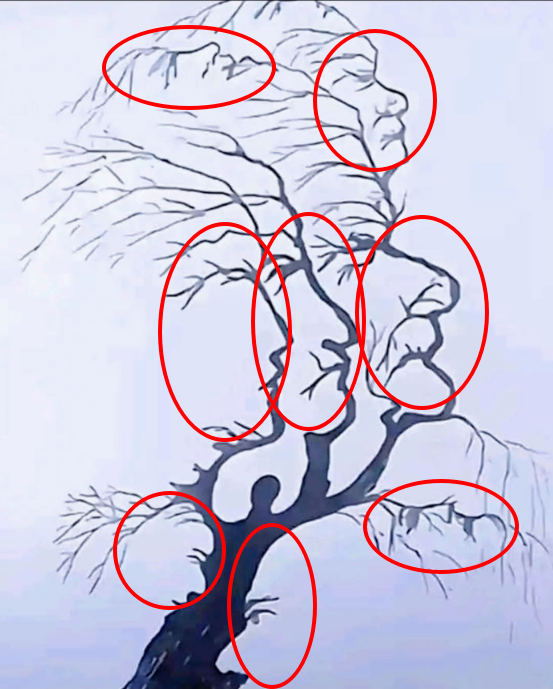
✅ 7. Include a Face-Count Reveal Section
Wrap up with a “Face Count Reveal” image showing all the hidden faces numbered or outlined. This rewards effort and invites readers to check their accuracy—boosting completion satisfaction and return visits.
Deepening Your Appreciation: More Than Just a Puzzle
Hidden-face illusions do more than entertain—they invite us to reflect on how we perceive, create, and interpret the world around us.
This tree illustration is more than a visual game—it’s a metaphor. It reveals how easily our minds impose meaning on randomness. A curve becomes a cheekbone, a knot becomes an eye, a gap in the sky becomes a knowing smile. It’s the same instinct that leads us to read emotions into ambiguous conversations or see patterns in everyday chaos.
Recognizing pareidolia helps us strike a balance between wonder and wisdom. It teaches us that:
- Not everything we see is real, and that’s okay.
- Imagination and illusion are close cousins, both rooted in our brain’s quest to make sense of the unknown.
- Our perceptions are subjective, yet they enrich how we experience art, nature, and even human connection.
By embracing this duality—critical thinking and creative joy—we deepen not just our appreciation of illusions, but of life itself.
Conclusion: Keep Hunting, Keep Wondering
This beautifully deceptive tree, brimming with hidden faces, is more than an image—it’s a reminder of the power of curiosity. With every careful glance, every shift in perspective, you train your brain to see the extraordinary within the ordinary.
Pareidolia puzzles do more than sharpen your mind; they connect people, spark conversation, and stir the imagination. They teach you to look longer, think deeper, and question what you assume is real. Whether you’re an educator nurturing focus, a therapist guiding emotional exploration, or simply a curious soul delighting in a good brain teaser—these illusions are for you.
So the next time you walk past a gnarled tree, gaze at a cloud, or stare into the swirls of wood grain or marble—pause. Ask yourself:
“How many faces can I find?”
Let that question become your invitation—to look closer, wonder more, and celebrate each hidden discovery as proof that your mind is wired not just to survive, but to imagine.
Happy face hunting. And don’t forget to share what you see—someone else just might see something entirely new.