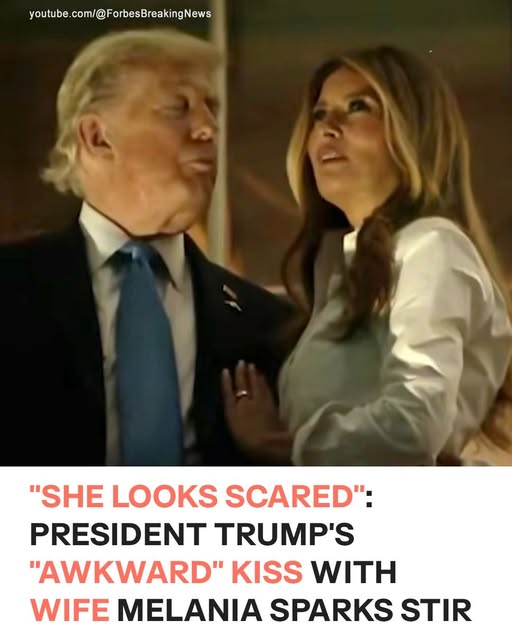
In today’s hyperconnected world, every presidential moment unfolds under a microscope of intense scrutiny and instant public judgment. What past generations once saw as private, fleeting glimpses into their leaders’ lives now explode into viral sensations—dissected frame by frame by millions who feel empowered to analyze, critique, and interpret every gesture, expression, and interaction.
The culture of presidential image analysis has soared to unprecedented heights in the social media era. Whereas photographs once trickled out in newspapers days after an event, reaching a limited audience, today’s images can reach millions within minutes—accompanied by a flood of real-time reactions that span from admiration to criticism to deep analysis.
This seismic shift has fundamentally transformed our relationship with political leadership. Each public appearance becomes more than just a political statement—it’s a performance under the spotlight, evaluated for its human nuances: the subtle expressions, body language, and interpersonal dynamics that reveal the complex personalities behind the public personas.
The Psychology Behind Public Image Interpretation
Our deep-rooted ability to read facial expressions and body language is one of humanity’s oldest social tools—honed over millennia to help us navigate complex relationships. Yet, when this instinct is applied to public figures through the frozen lens of photography or video, it often leads to wildly divergent interpretations of the very same moment.
Static photos, in particular, capture just a split second—a snapshot that may fail to reflect the full context or flow of an interaction. A fleeting expression snapped at the perfect (or imperfect) instant can seem to reveal emotions or intentions that might not have been present throughout the encounter. This inherent limitation opens the door for misunderstanding—and even deliberate manipulation.
Another powerful factor at play is confirmation bias—the tendency for people to interpret images through the filter of their existing beliefs. Supporters may read ambiguous looks as warmth or agreement, while detractors might see the exact same expressions as discomfort or conflict.
Social media supercharges these biases by creating echo chambers where like-minded users amplify and reinforce shared interpretations. The viral spread of controversial images often cements initial reactions into dominant narratives, drowning out more balanced or nuanced perspectives.
The Evolution of Presidential Privacy and Public Access
Presidential privacy in America has transformed dramatically over time. Early presidents enjoyed relative seclusion, with minimal media intrusion and limited public glimpses into their private lives. But the rise of photography, television, and now social media has steadily dismantled the walls between official duty and personal moments.
Today’s presidents and their families must navigate a world where virtually every appearance—whether a formal event, a family gathering, or a casual interaction—is captured, shared, and dissected by millions. The relentless 24-hour news cycle and instant social media feedback have created a constant demand for access, with citizens expecting to see their leaders in informal, relatable settings, revealing genuine emotion and personality. Yet this transparency comes at a price: every moment is exposed to public judgment, often blurring the line between authenticity and performance.
Striking the right balance between openness and privacy remains a fraught challenge. While greater access can foster connection and accountability, relentless scrutiny risks pressuring leaders into staged interactions, undermining natural behavior and genuine engagement.
When Celebrity Culture Meets Political Leadership
The merging of celebrity culture with political life has reshaped how presidential families are perceived and discussed. First families now face the same spotlight traditionally reserved for entertainment icons—every fashion choice, relationship dynamic, and personal expression becomes fodder for public fascination.
This celebrity aura can benefit politicians by humanizing them and forging emotional bonds with voters. However, it also subjects them to invasive scrutiny, where appearance and demeanor often overshadow policy and governance. The emphasis on surface impressions fuels narratives built more on perception than political substance.
Social media further democratizes this scrutiny, empowering millions to instantly share their takes, shaping powerful narratives that can dramatically sway public opinion and political discourse in ways traditional media simply cannot.
The Science of Nonverbal Communication
Expert analysis of body language and nonverbal cues has grown increasingly sophisticated, offering intriguing insights into what gestures, expressions, and postures might reveal about relationships and emotions. Yet, applying these techniques to political figures raises important questions about the reliability and fairness of conclusions drawn from limited, often decontextualized visual snapshots.
Nonverbal communication specialists stress that accurate interpretation demands a deep understanding of context—cultural backgrounds, individual personality traits, and the specific circumstances surrounding observed behavior. Unfortunately, single photos or brief clips rarely provide enough information for dependable analysis. Despite this, public discourse frequently treats such observations as definitive windows into politicians’ personal relationships or mental states.
The rise of body language analysis in political commentary has created something of a pseudo-science—simplifying complex human interactions into neat narratives. While nonverbal signals do carry valuable clues, interpreting political figures’ behaviors requires nuance and an awareness of the unique pressures these individuals face.
Even professional lip-readers and body language experts often disagree when interpreting the same footage, highlighting the inherently subjective nature of such readings. The public’s fascination with these interpretations reflects a genuine desire to understand the human side of leadership—but it also underscores the limits of drawing firm conclusions from fleeting, visual evidence.
Holiday Celebrations and Presidential Traditions
National holiday events represent some of the most iconic and symbolic moments of presidential leadership. These occasions allow presidents to connect with citizens, display patriotism, and participate in shared cultural rituals that transcend political divides.
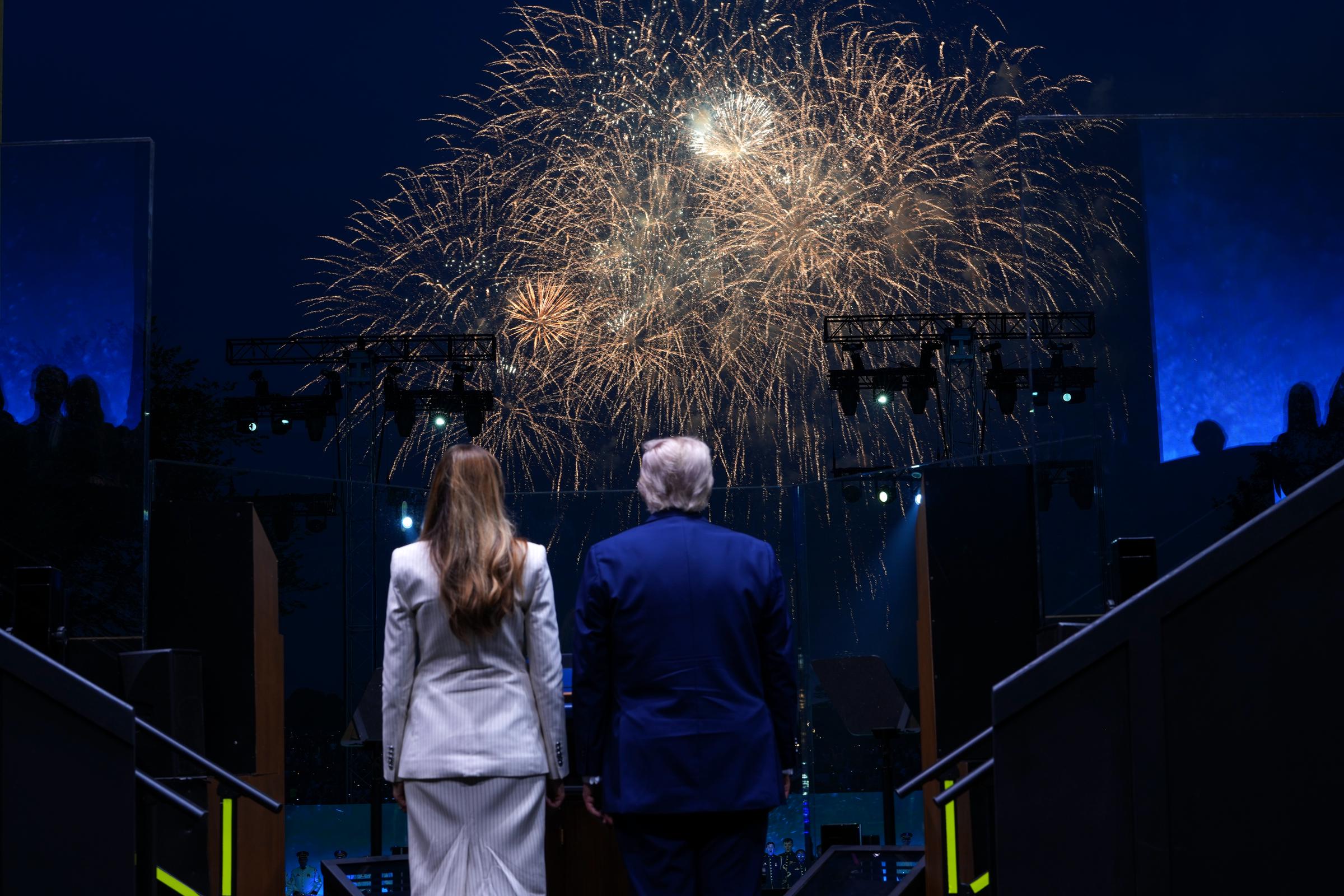
Independence Day celebrations at the White House have evolved into cherished traditions, blending spectacular patriotic displays with rare, intimate glimpses into presidential life. Fireworks, formal ceremonies, and candid family moments captured during these events produce powerful images that shape public perceptions of leadership.
Modern presidents face the challenge of balancing ceremonial duties with the human desire to genuinely enjoy these celebrations with loved ones. The ever-present cameras and awareness that every expression will be scrutinized create pressure to perform rather than simply experience the moment.
Because presidential holiday participation carries such symbolic weight, even casual gestures take on political meaning. A brief affectionate exchange can be seen as a testament to family values, while perceived awkwardness may fuel speculation about personal or political tensions.
The Viral Power of Presidential Imagery
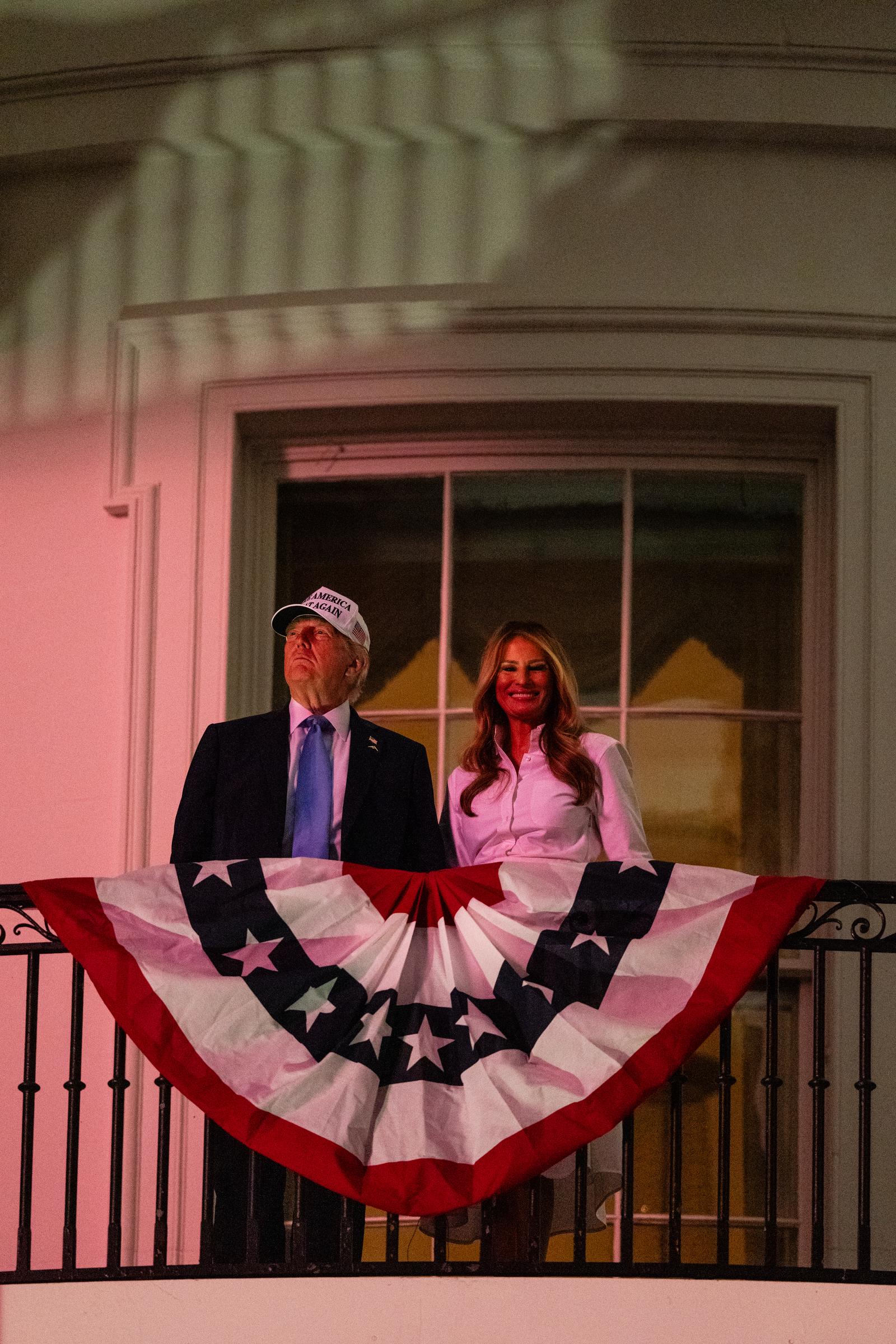
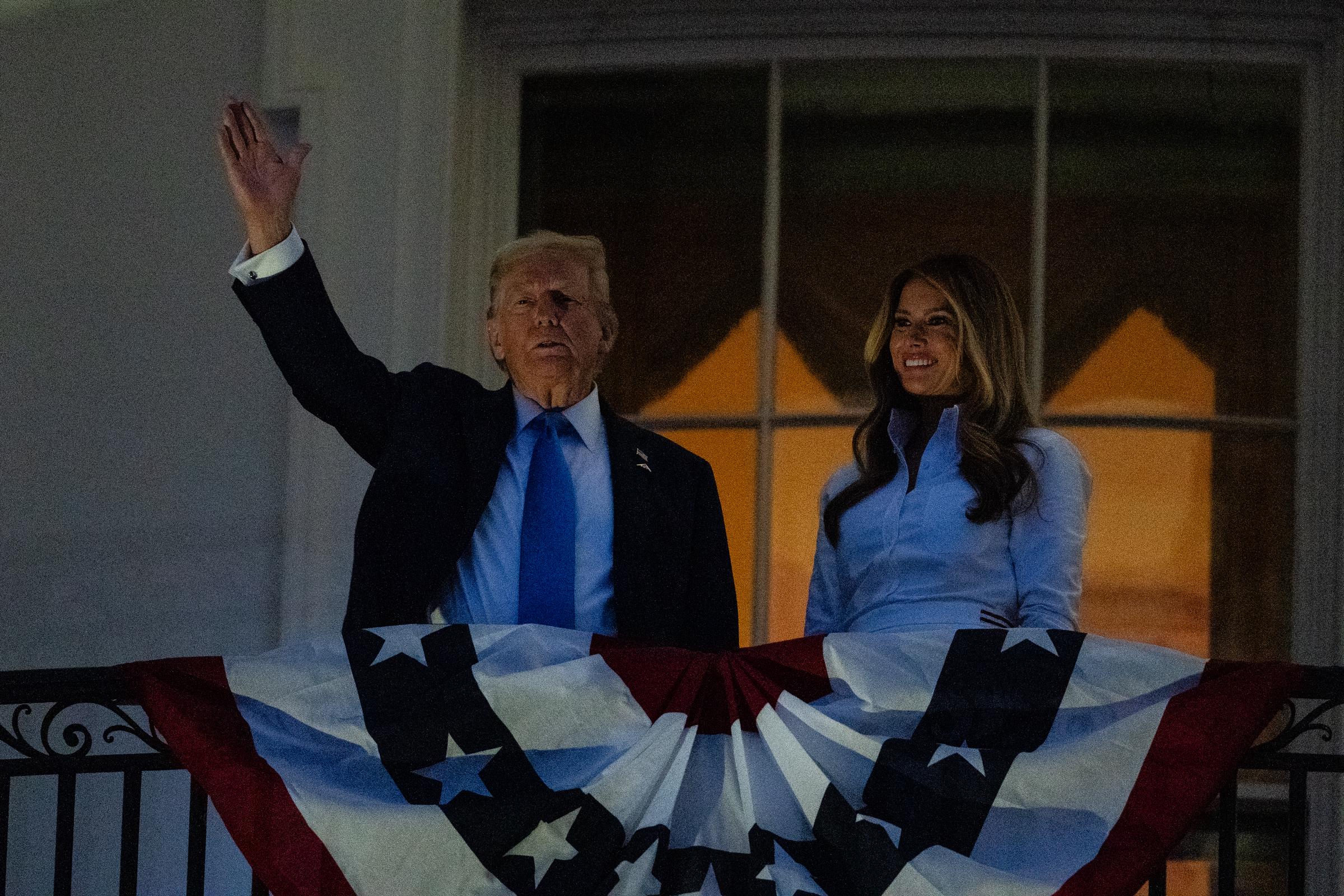
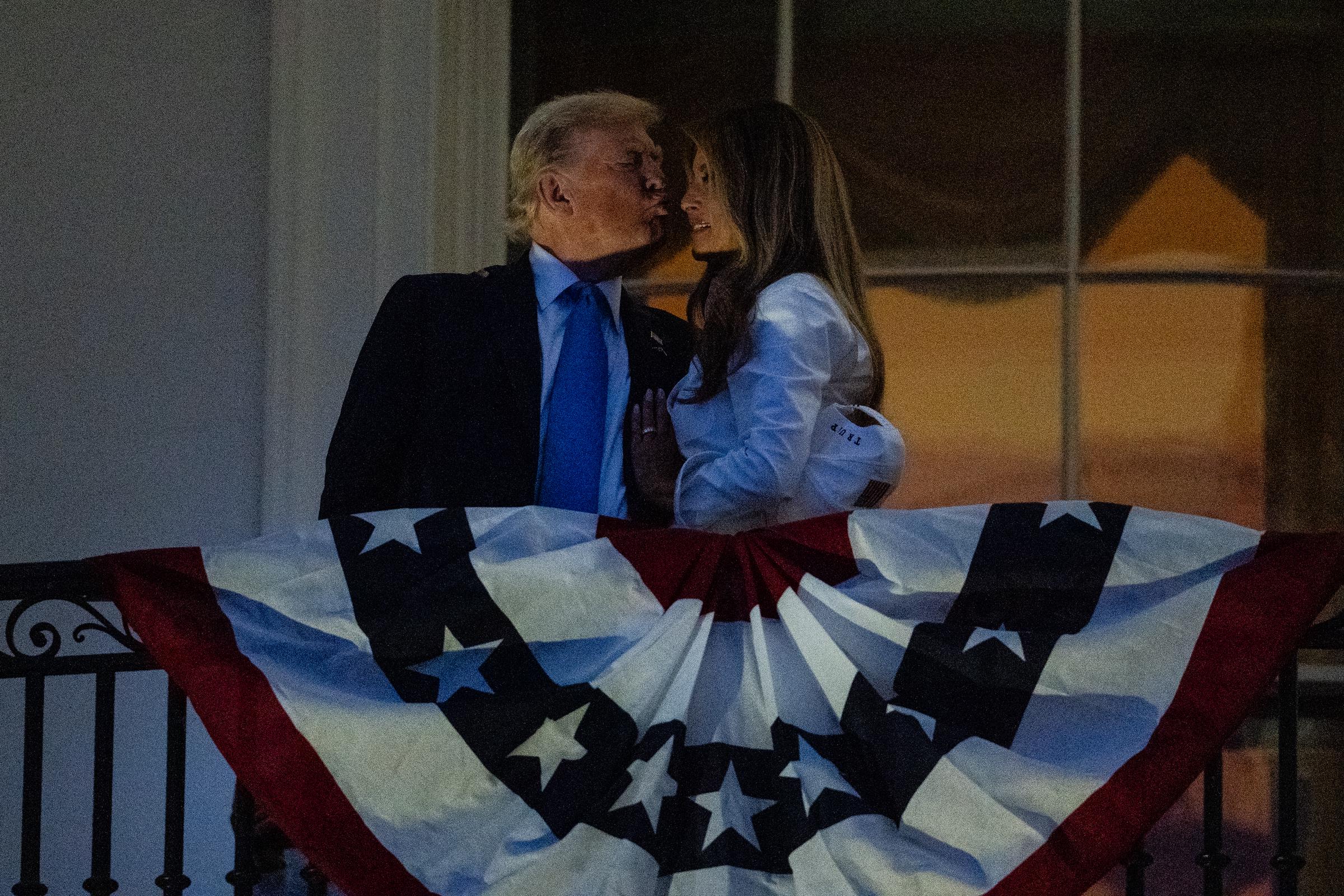
A single photograph from the White House’s July 4th Independence Day fireworks became a lightning rod for social media debate and analysis. Taken from the Truman Balcony, the image captured President Trump leaning toward First Lady Melania Trump against the dazzling backdrop of fireworks—an intimate moment ripe for celebration.
Yet, social media quickly fixated on Melania’s facial expression, sparking a flood of commentary that ranged from supportive to critical, humorous to harsh. The image’s viral spread underscored how presidential moments now ignite national conversations within hours.
This intense reaction exemplifies how every facet of presidential life has become open for public scrutiny. What may have been a private, tender moment between spouses instantly transformed into a public spectacle—dissected by millions of strangers, each interpreting it through their own biases and perspectives.
Divergent Public Interpretations and Social Media Response
The social media reaction to the now-viral Independence Day photograph of President Trump and First Lady Melania laid bare the deep political divides shaping contemporary discourse. Critics zeroed in on what they saw as awkwardness or discomfort in the First Lady’s expression, while supporters defended the couple and decried the intense scrutiny.
Comments like “That’s a kiss??? Lmao” and “She looks scared” expressed skepticism, suggesting the First Lady appeared uneasy or reluctant. These views quickly gained traction, fueling viral threads filled with criticism and speculation. Others chimed in with remarks such as “She looks terrified 😂” or “Look at her face!” using casual language and emojis—illustrating how social media has transformed political commentary into rapid, informal reactions.
Yet not all reactions were negative. Some offered more generous interpretations, like “I think she’s a little shy but she loves the kisses,” implying that any awkwardness might stem from personality traits rather than relationship issues. Supporters also pushed back with comments such as “They love each other. Stop with your nonsense. It gets old,” or “So nice to have attractive people in the White House again who love each other,” highlighting how partisan loyalty colors perception of intimate moments.
This wide range of responses reveals how a single image can evoke vastly different emotions and analyses depending on the viewer’s prior beliefs—reflecting a broader challenge in political discourse, where shared facts often lead to sharply divergent conclusions.
The Role of Professional Analysis in Political Commentary
Body language and lip-reading experts have increasingly become fixtures in political commentary, lending their expertise to interpret presidential behavior and interactions. While these professionals bring valuable insights, their analyses also raise concerns about reliability and appropriateness when applied to fleeting, public moments.
During a June military parade marking the Army’s 250th anniversary, experts offered contrasting readings of the Trump couple’s behavior. Lip reader Jeremy Freeman suggested affectionate exchanges, interpreting the President as saying “Thank you, baby” to the First Lady during the event—a portrayal of warmth and intimacy.
Conversely, body language analyst Judi James observed signs of tension and formality in the First Lady’s demeanor, painting a picture of distance or discomfort. Such conflicting professional opinions highlight the subjective nature of interpreting behavior from brief appearances and underscore the difficulty of drawing definitive conclusions from limited visual evidence.
This contradiction points to a fundamental problem: while expert analysis can enrich understanding, applying it to political figures in isolated moments may not capture the full reality.
Historical Context and Relationship Dynamics
Public fascination with presidential marriages is rooted in history. Some couples have been celebrated for their strong partnerships, while others have sparked speculation and concern. Interest in these relationships reflects both legitimate questions about leadership stability and simple human curiosity about those in power.
The Trump presidency introduced unique dynamics, given the couple’s celebrity history long before entering politics. Unlike many political pairs whose relationships developed within political circles, the Trumps’ decades of media spotlight added a layer of pre-existing public scrutiny.
Transitioning from celebrity coverage to political analysis transformed public scrutiny, blending entertainment-style fascination with political evaluation. However, the skills used to analyze celebrity relationships do not always translate smoothly to understanding the pressures of political leadership.
Media Literacy and Critical Thinking in the Digital Age
The viral spread and instant commentary on presidential images highlight pressing challenges in media literacy and critical thinking today. Citizens face a flood of visual content and real-time opinions while trying to make informed judgments about leaders and democratic institutions.
Social media democratizes media analysis, placing professional journalism alongside amateur interpretations. This mix can promote accountability and diverse viewpoints but also fuels misinformation and superficial assessments of complex realities.
Educational and civic institutions grapple with teaching critical evaluation skills that go beyond text to include the visual, fast-paced nature of modern political discourse. The psychological draw of quick, emotional responses often eclipses deeper, more nuanced analysis—a dynamic intensified by social media’s design favoring immediate sharing over thoughtful reflection.
The Future of Presidential Privacy and Public Scrutiny
As technology advances and social platforms evolve, scrutiny on presidential families is likely to deepen. Future leaders will navigate an environment where every public moment is potential viral content, analyzed and debated instantly.
Democratic societies face the challenge of balancing public interest and transparency with respect for the privacy and dignity of public servants and their families. While openness is vital for accountability, relentless personal scrutiny risks discouraging qualified candidates who value privacy or have complex personal lives—potentially narrowing the pool of leaders.
Ongoing debates about presidential privacy must weigh the benefits of transparency against the human costs of invasive scrutiny. As image analysis becomes more sophisticated and widespread, citizens, media, and political institutions must collaborate to establish norms that uphold democratic values while honoring human dignity.
The evolution of how we interpret presidential imagery mirrors broader shifts in the intersection of leadership, celebrity, and public service. Moving forward, the challenge will be to keep the focus on substantive policy discussions even as legitimate public interest in the personalities and relationships of political leaders persists.