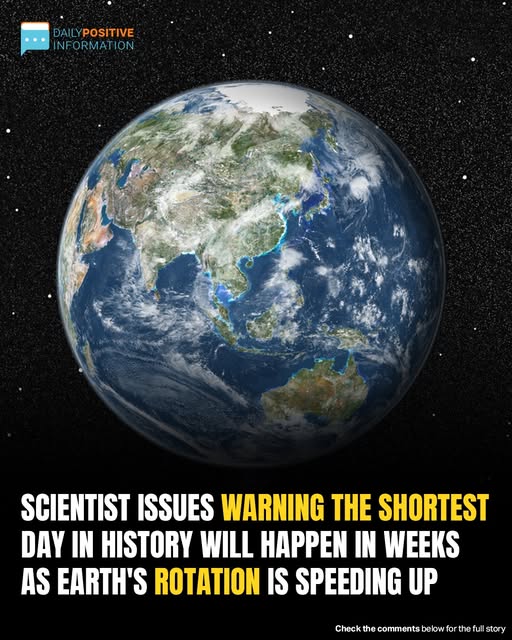
While we’re used to seasonal shifts in daylight, scientists now warn that the shortest day in recorded history may be just weeks away—and it’s not just because of the time of year.
According to recent findings, Earth’s rotation is unexpectedly speeding up, bringing days that are fractionally shorter than ever before.
We typically mark a year by the Earth’s journey around the Sun—roughly 365 rotations on its axis. But that number hasn’t always been constant.
In fact, throughout Earth’s history, the planet’s spin rate has varied significantly, with estimates ranging from 490 rotations per year in the distant past to as few as 372. This means the length of a single day has never been fixed—and it’s changing again, right now.
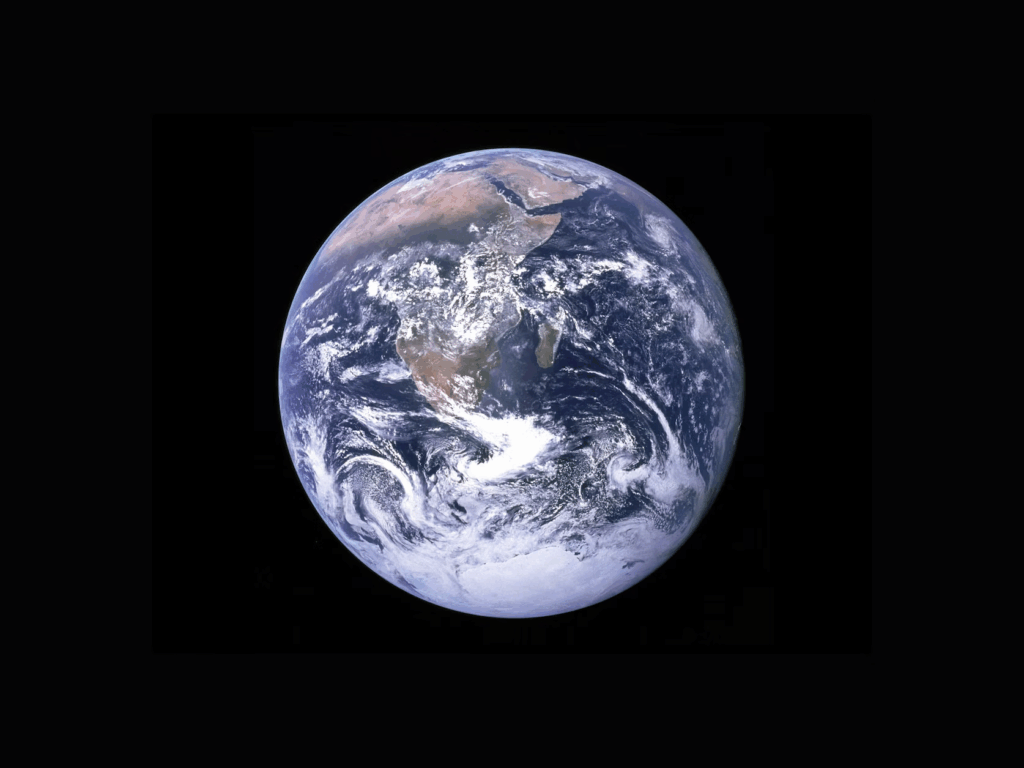
The speed at which Earth spins is influenced by a complex mix of factors—everything from the Moon gradually drifting away, to internal shifts within our planet, to fluctuating sea levels.
But this time, something unusual is happening: Earth’s rotation is speeding up in a way scientists can’t fully explain.
According to the Daily Mail, astrophysicist Graham Jones from the University of London points to specific dates—July 9, July 22, and August 5—when the Earth could spin noticeably faster. On these days, our planet’s rotation could make each day up to 1.30, 1.38, or even 1.51 milliseconds shorter.
While this might seem like a minuscule change, researchers warn it could impact technologies that rely on ultra-precise timekeeping, like GPS navigation systems.
What’s even more puzzling is that no one yet knows why Earth is accelerating. Leonid Zotov of Moscow State University told Timeanddate.com:
“Nobody expected this. The cause of this acceleration is not explained.”
He added,
“Most scientists believe it is something inside the Earth. Ocean and atmospheric models don’t explain this huge acceleration.”
Natural events like earthquakes can also affect Earth’s spin. For example, the massive magnitude 9.0 earthquake off Japan’s east coast in 2011 caused the planet’s axis to shift by nearly 17 centimeters, shortening our days ever so slightly. The quake even displaced Japan’s main island by an astonishing 2.4 meters.
NASA’s Dr. Richard Gross explained this effect to Popular Mechanics:
“Earthquakes can change the Earth’s rotation by rearranging the Earth’s mass.”
He compared it to a spinning ice skater who pulls her arms in to spin faster:
“If the mass moves closer to the axis of rotation, the Earth spins faster and days become shorter.”
Despite the surprising acceleration observed since 2020, there’s no need to panic. Scientists expect that Earth’s rotation will eventually slow down again—it’s just a matter of when.
As Zotov put it,
“Sooner or later, Earth will decelerate.”