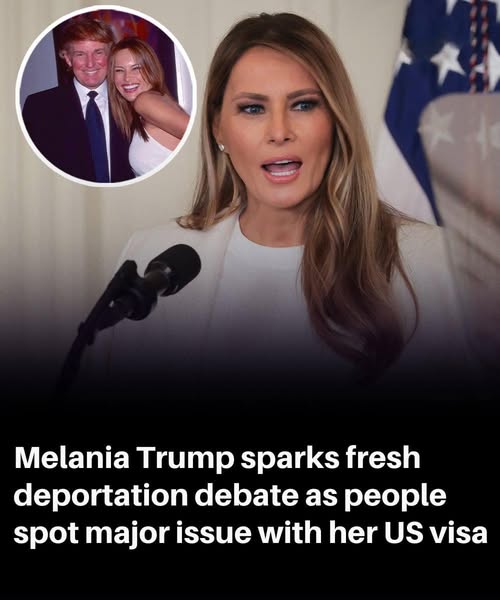
Melania Trump’s visa status has become a hot-button issue, sparking fresh debates over immigration as her husband, Donald Trump, intensifies his hardline stance. Over the past week, the former president has made waves by threatening deportation for various public figures, including a New York mayoral candidate from Uganda and his former ally, Elon Musk, a South African-born entrepreneur. Trump also revealed plans for a controversial new migrant detention center in Florida, dubbed “Alligator Alcatraz,” while the Supreme Court curbed lower courts’ power to block his efforts to restrict birthright citizenship, impacting millions of immigrant families.
In a show of support for these policies, Melania visited an immigration detention center in Tucson, Arizona, praising ICE officials for their work. But this visit reignited a heated debate online about her own immigration history. Critics pointed out that Melania, who hails from Slovenia, had worked in the U.S. without proper authorization in the late 1990s. She arrived on a tourist visa, which explicitly forbids employment, yet reportedly earned over $20,000 through modeling before securing a skilled worker visa.
Though she later adjusted her status and became a U.S. citizen in 2006, her period of unauthorized work raised questions about hypocrisy, especially given her public endorsement of strict immigration enforcement. Social media users were quick to ask why Melania was never deported, while others in similar situations face removal for the same violations.
The controversy has stirred speculation, with some left-leaning voices suggesting that Trump’s tough deportation agenda could one day target his own wife. Some even called for her deportation, along with figures like Musk, arguing they gained U.S. citizenship under questionable circumstances.
This ongoing debate highlights deep divisions in the national conversation on immigration, questioning the fairness, legality, and political motivations behind enforcement policies.