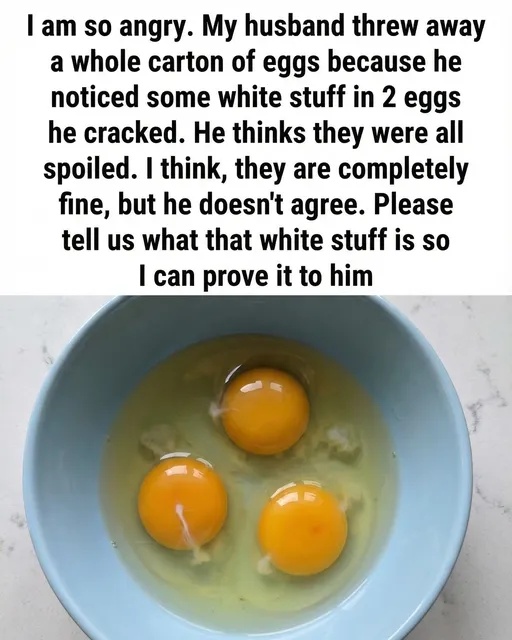
Cracking open an egg sometimes reveals a thin, white, string-like strand attached to the yolk. For many, this can look unusual or even worrying at first glance. Some might assume it signals spoilage or remove it before cooking. In reality, this small feature is completely natural and harmless. In fact, it often indicates the egg is fresh and well-preserved—a detail to understand rather than fear.
This strand is called the chalaza, a natural protein structure inside the egg. Its main role is to keep the yolk centered within the egg white, stabilizing it as the egg moves. You can think of it as a gentle support system, protecting the yolk from bumping against the shell. Most eggs have two chalazae, one on each side of the yolk, though one may be more noticeable than the other when the egg is cracked open.
The chalaza can also offer clues about freshness. In newer eggs, it tends to be firmer and more defined, while in older eggs it becomes thinner and less visible. From a nutritional standpoint, it is made of the same protein found in egg whites and is completely safe to eat. During cooking—whether frying, scrambling, or baking—it blends in and disappears.
There’s no need to remove it unless preparing recipes requiring an ultra-smooth texture, like custards or delicate sauces. Otherwise, leaving it in does not affect taste or quality. Understanding this small detail makes cooking easier, showing that what seems unusual is often just nature’s thoughtful design at work.