
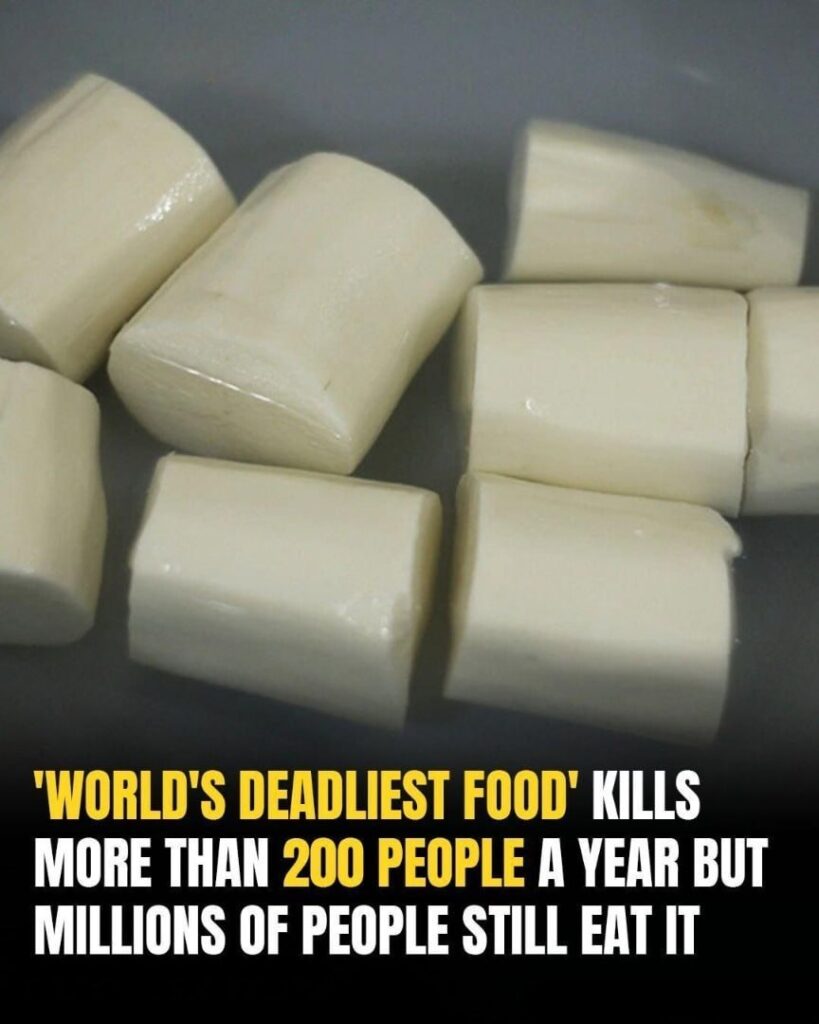
Cassava is a widely consumed root vegetable that serves as a staple food for hundreds of millions of people around the world, especially in parts of Africa, Asia, and South America.
It is valued for being affordable, filling, and a major source of carbohydrates. However, cassava must be properly prepared before consumption, as it naturally contains compounds that can be harmful if eaten raw or incorrectly processed.
When cassava is not prepared correctly, these compounds can release cyanide, which can be dangerous to human health. For this reason, traditional preparation methods such as soaking, fermenting, boiling, or drying are commonly used to make it safe to eat.
Despite these risks, cassava remains an important food source for many communities and plays a key role in global food security. Proper preparation techniques have made it safe for regular consumption for generations.