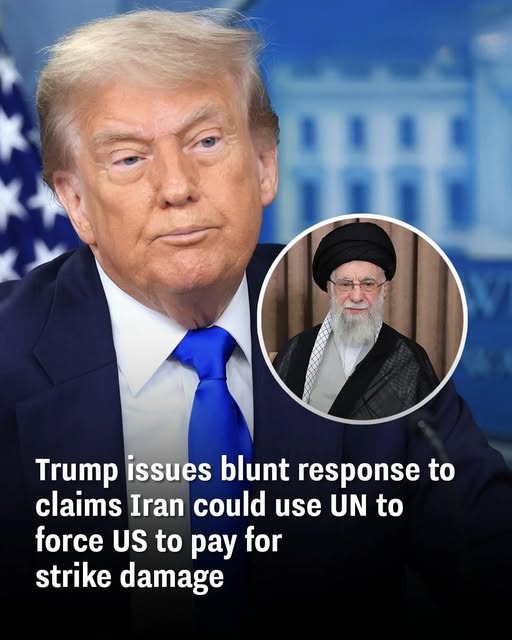
Trump Dismisses Iran’s UN Demand for Reparations Over US Strikes
Former President Donald Trump sharply rejected Iran’s formal appeal to the United Nations seeking reparations, labeling the claim “ridiculous” during a brief interview at the White House on July 4th.
The spat follows a tense military showdown between the two nations. On June 21, the U.S. executed a precision strike targeting critical Iranian nuclear sites at Fordow, Natanz, and Esfahan—an operation Trump proudly hailed as a “complete success.”
In swift retaliation, Iran launched missile attacks on two major U.S. military bases: Al Udeid Air Base in Qatar and Ain al-Asad in Iraq’s west, fueling an already volatile regional atmosphere.
Iran’s Foreign Minister, Abbas Araghchi, escalated the diplomatic conflict by sending a pointed letter to UN Secretary-General António Guterres. The letter accuses the U.S. and Israel of unprovoked aggression and breaches of international law, demanding the Security Council hold both countries accountable and enforce reparations.
“The attacks deliberately targeted hospitals, relief centers, and civilian infrastructure,” Araghchi’s letter asserts. “We urge the Security Council to officially designate the United States and Israel as aggressors and demand compensation for the damages.”
When pressed about Iran’s demand amid Independence Day celebrations, Trump offered a terse dismissal: “It’s pretty ridiculous,” refusing to elaborate further.
Adding a cyber dimension to the escalating tensions, a hacking group known as “Robert,” allegedly linked to Iranian operatives, claims to have stolen over 100 gigabytes of sensitive data connected to Trump’s inner circle. Reuters reports the hackers accessed email accounts of prominent Trump allies, including White House staffer Susie Wiles, attorney Lindsey Halligan, advisor Roger Stone, and even adult film star Stormy Daniels.
Though the authenticity of the leaked data remains unconfirmed, the threat of its release intensifies concerns over cybersecurity amid the fraught US-Iran standoff.
As global eyes turn to the UN’s response, the world watches closely how this complex saga will evolve—diplomatically, militarily, and in the shadowy realm of cyber warfare.