A massive jellyfish has recently been spotted washing ashore at a well-known vacation destination, sending out warnings for both locals and tourists alike.
If you’ve ever experienced the sharp, burning sting of a jellyfish, you know it’s a kind of pain that lingers in your memory. I remember the first time I got stung – it was about 17 years ago, when I was just a kid, and it was one of the worst pains I’d felt at that age.
That jellyfish, though small, packed a punch. Its tentacles wrapped around my arm, and at the age of eleven, I was writhing in agony. My dad, desperate to help, thought he’d heard some old remedy that could ease the pain – an attempt to relieve the sting by… well, using his own method.
Ironically, his “help” would’ve likely made things worse. Fortunately, I refused, deciding instead to ride out the agony until it passed.
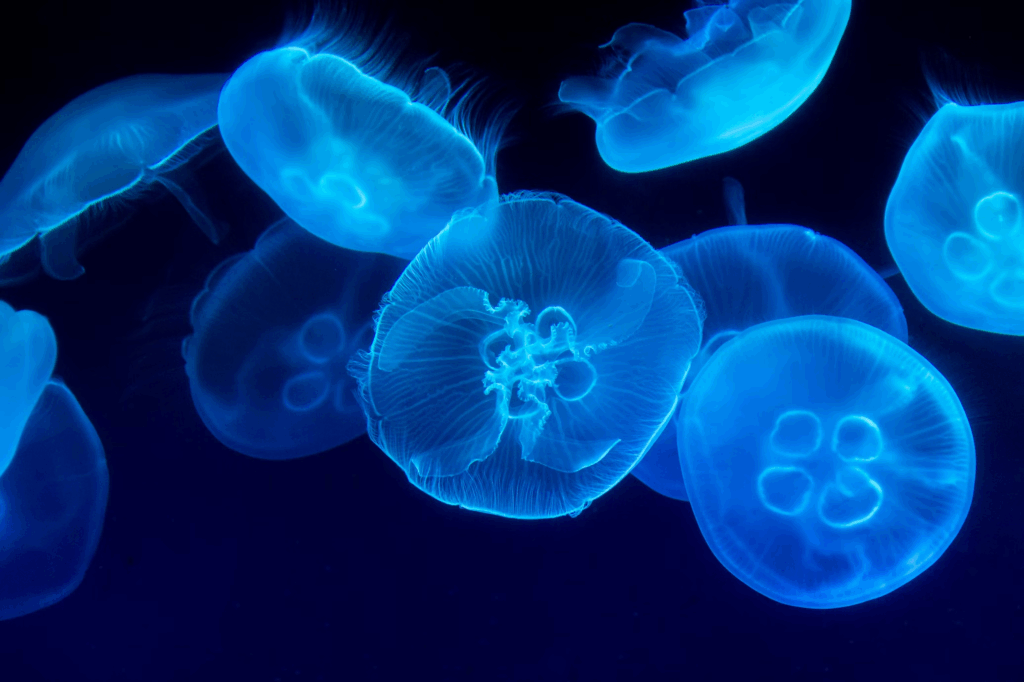
I might have actually been more inclined to accept my dad’s unconventional remedy if the jellyfish in question had been a lion’s mane jellyfish. To put this into perspective, these creatures are massive—almost five times the size of the Statue of Liberty. And if you count their tentacles, they can stretch up to 120 feet, which is longer than a blue whale!
Despite their enormous size, lion’s mane jellyfish are lighter than blue whales due to their thin, long tentacles. But those tentacles pack a punch. The recent appearance of one such jellyfish on the shores of Willard Beach in South Portland, Maine, caught the attention of local authorities and beachgoers.
The City of South Portland shared a post on Facebook about the jellyfish: “Spotted this weekend at Willard Beach: A nearly 5-foot wide lion’s mane jellyfish!”
The post went on to remind everyone: “If you see one, here’s what to do: Don’t touch it! They sting. Observe it. They’re fascinating to watch and quite beautiful. If you see one washed up at Willard Beach, notify a lifeguard who will help it back into the water using a shovel.”
The sting of a lion’s mane jellyfish can be extremely painful and cause significant swelling, so the Wildlife Trust advises seeing a doctor if symptoms worsen.
Nicholas Record, a senior research scientist at Bigelow Laboratory for Ocean Sciences, has been tracking sightings of these jellyfish since 2014. He noted that in recent years, sightings have been more frequent, with some reaching sizes unheard of before.
In a 2019 interview with weather.com, he revealed: “Typically, the largest lion’s mane jellyfish reported are about the size of a dinner plate. This year, I’ve had reports of ones that are two feet across—and even a few that are five feet wide.”
While lion’s mane jellyfish have always been a part of the Gulf of Maine ecosystem, Record says the size and frequency of sightings this year make it particularly unusual.