
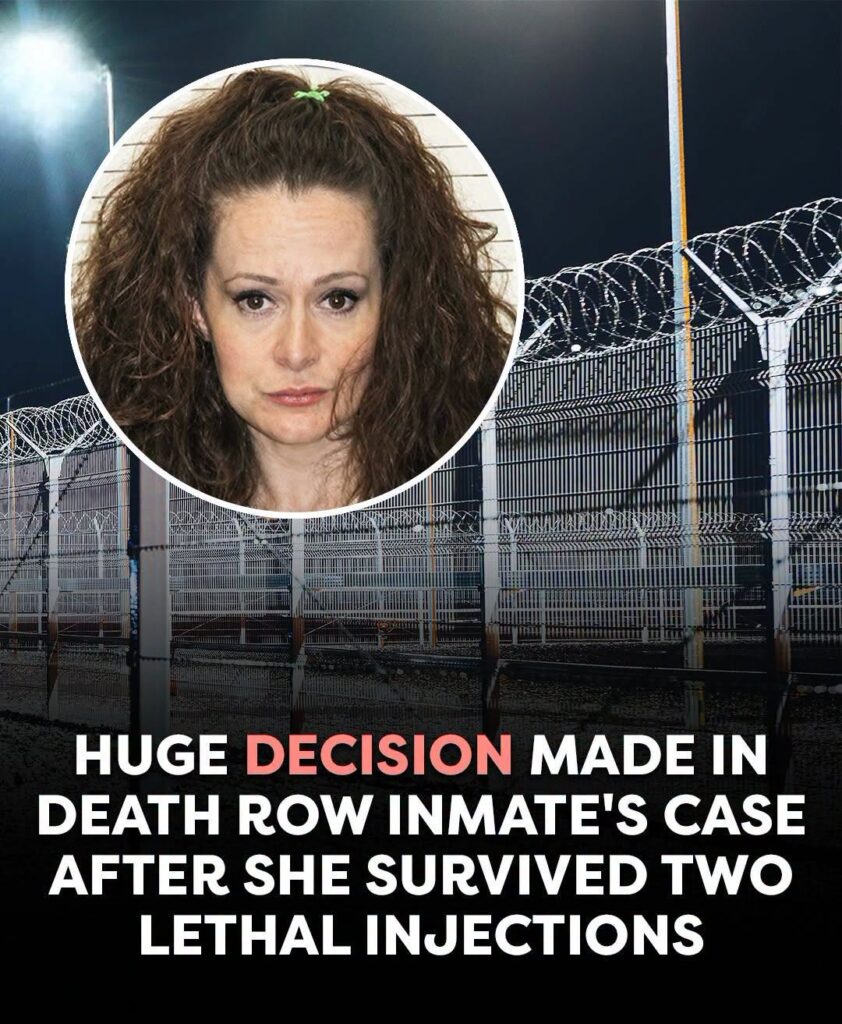
Christa Pike has been granted a significant legal update following the failed attempt to execute her in Tennessee, with a judge making a huge decision.
The 50-year-old was scheduled to be executed on September 30, but the procedure did not go as planned. Instead of dying, Pike survived after reportedly being given two doses of the execution drug pentobarbital.
The incident has raised serious questions about how the execution was carried out, with Pike’s lawyers arguing that Tennessee’s lethal injection protocol was unconstitutional in her case.
Her legal team has continued to challenge the state’s plans to put her to death, while officials have launched an investigation into what went wrong.
Now, a judge has made a major decision that could give Pike another opportunity to challenge the method the state intends to use to execute her.
What happened during Christa Pike’s failed execution?
Pike was due to become the first woman executed in Tennessee in more than 200 years when officials attempted to carry out her death sentence on September 30.
According to her lawyers, she was given two doses of pentobarbital, with at least seven needles reportedly used during the procedure. One needle allegedly came out of her arm bent at a 90-degree angle.
Pike’s attorneys have raised concerns about the difficulties executioners encountered while attempting to access her veins, arguing that her physical characteristics made the procedure particularly challenging.
The aftermath was also alarming. Pike was reportedly left unconscious and in a critical condition, with her lawyers initially being told that she was brain dead and would be taken off life support.
However, she subsequently regained consciousness and was later reported to be talking and walking.
Her attorney, Randy Spivey, also revealed that Pike had suffered a blood clot in her arm and developed pneumonia. He said she was unable to eat following the failed execution.
The incident is believed to be the first time a death row inmate in the United States has survived an attempted lethal injection.
Why was Christa Pike sentenced to death?
Pike was sentenced to death for the murder of 19-year-old Colleen Slemmer, her Job Corps classmate, in January 1995.
Pike was 18 at the time of the killing, which took place in Tennessee. She was subsequently convicted and sentenced to death.
She is the only woman on Tennessee’s death row, and her case has attracted renewed attention following the failed execution attempt.
Her lawyers have also challenged the constitutionality of her execution on other grounds, including arguments relating to her history of childhood rape and sexual violence.
In July, the Tennessee Supreme Court appointed a senior judge to examine evidence connected to those claims.
However, the judge’s investigation concluded in August that Pike’s legal team had not established that she faced a substantial risk of pain, serious illness or needless suffering if the execution proceeded.
That finding allowed the state to move forward with the planned execution in September.

What went wrong with the execution?
Tennessee’s execution protocol uses the drug pentobarbital, which is intended to bring about death when administered as part of the lethal injection procedure.
But Pike’s legal team had already raised concerns about the state’s method before the September attempt.
In January, her attorneys filed a complaint challenging Tennessee’s lethal injection protocol. They argued that the procedure was unconstitutional, particularly given Pike’s individual medical circumstances.
The complaint was dismissed by the Tennessee Supreme Court in May.
Her lawyers claimed the state’s protocol was affected by secrecy, inadequate attention to detail and the involvement of prison personnel they alleged were not properly trained or licensed to perform medical tasks.
They also argued that Pike’s physical characteristics, including her small veins, made inserting needles difficult.
Following the failed attempt, questions were raised about the execution team’s actions and the emergency response.
Tennessee Governor Bill Lee subsequently paused all remaining executions scheduled for that year and ordered an independent review into what had happened. The incident was the state’s second failed execution since May.
During a court hearing, Tennessee Assistant Attorney General William Ayers was asked whether Pike’s execution would be rescheduled. According to the New York Post, he responded: “I can’t answer that question.”
Judge makes major decision in Christa Pike’s case
On October 8, a judge ruled that Pike’s legal challenge to Tennessee’s lethal injection procedure should be reopened, giving her legal team another opportunity to pursue its arguments, the New York Post reports.
Judge I’Ashea Myles issued the order in Davidson County Chancery Court in Nashville after Pike’s lawyers sought to revive the case following the failed execution.
Myles found that Pike had established ‘extreme, unique, exceptional, or extraordinary circumstances’ that allowed her to seek relief from the court.
The original complaint sought to prevent Tennessee from using lethal injection to execute Pike, arguing that the state’s single-drug pentobarbital protocol was unconstitutional as applied to her.
Her lawyers maintain that the procedure presents particular risks in her case because of her medical circumstances and the difficulties associated with accessing her veins.
The ruling does not mean Pike’s death sentence has been overturned, nor does it guarantee that she will avoid execution. Instead, it allows her legal challenge to be considered again.
The decision also comes as officials face mounting scrutiny over the September incident and the circumstances that led to Pike surviving the procedure.
For now, the question of whether Tennessee will attempt to execute Pike again remains unresolved. The state has paused executions while its review continues, and officials have not confirmed a new date for her execution.