
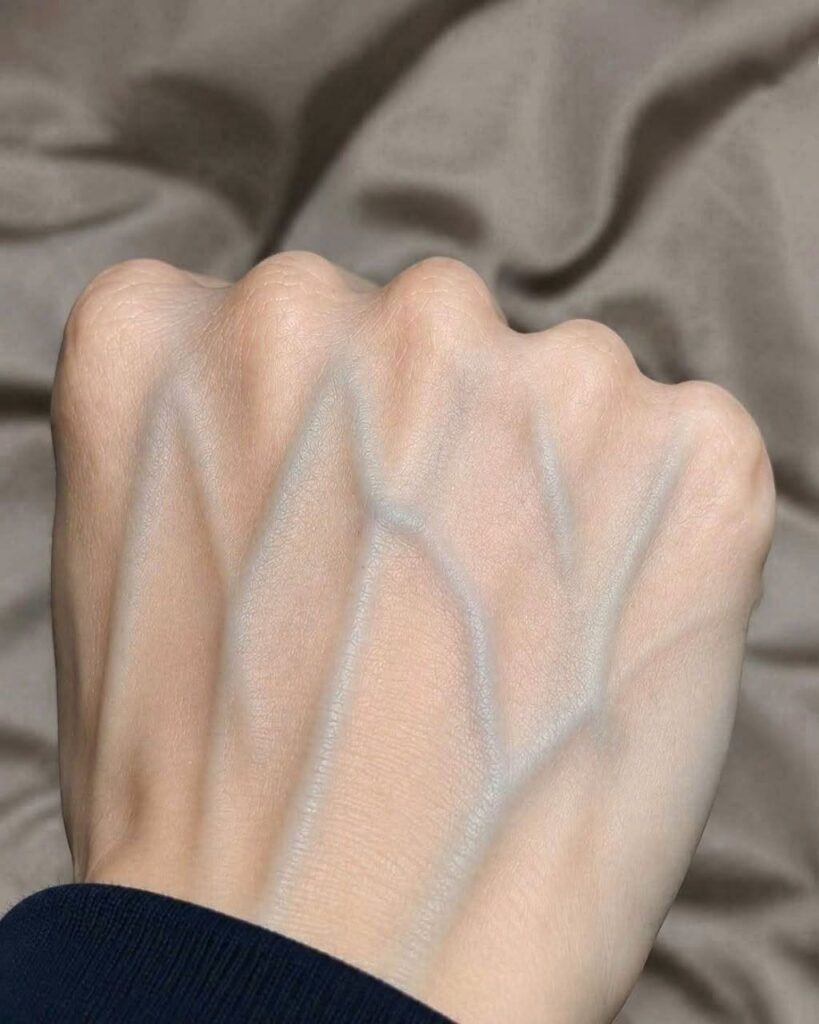
Why Are the Veins in Your Hands Suddenly More Visible? Doctors Explain What Your Body May Be Telling You
Have you ever looked down at your hands and noticed that the veins seem larger, darker, or more pronounced than they used to be? Perhaps they appear as raised blue lines across the backs of your hands, or maybe they become especially noticeable after exercising, spending time in warm weather, or taking a hot shower.
For many people, this unexpected change raises an immediate question: Could these visible veins be a warning sign of an underlying health problem?
It is an understandable concern. Our hands are among the most visible parts of our bodies, and even subtle changes in their appearance can attract attention. Unlike changes that happen beneath clothing, prominent hand veins are difficult to overlook.
Social media has made this concern even more widespread. Posts sometimes suggest that bulging hand veins indicate blocked arteries, heart disease, dangerous blood clots, or poor circulation. Although certain vascular conditions can affect the appearance of veins, these alarming claims often overlook a fundamental medical fact: visible hand veins are extremely common, and in most cases, they are harmless.
Their appearance can be influenced by aging, genetics, skin thickness, body fat, physical activity, temperature, and ordinary changes in blood flow. Some people naturally have prominent veins throughout their lives, while others notice them becoming more visible as they get older.
Still, not every change should be dismissed. A vein that suddenly becomes painful, swollen, unusually firm, or surrounded by discolored skin may require medical evaluation.
The important distinction is not simply whether your veins are visible, but whether their appearance has changed and whether other symptoms are present.
Understanding why hand veins become prominent can help you recognize normal variations in your body while remaining alert to the symptoms that deserve attention.
1. Understanding the Veins Beneath Your Skin
Before exploring why hand veins become more visible, it helps to understand their role in the circulatory system.
Your body contains an extensive network of blood vessels responsible for transporting blood between your heart, lungs, and tissues.
Arteries carry blood away from the heart, while veins return blood toward it. Most arteries carry oxygen-rich blood, and most veins carry blood that has already delivered much of its oxygen to the body’s tissues.
The veins in your hands perform this essential job continuously.
Some veins are located deep within the muscles and tissues, while others lie much closer to the skin’s surface. These are called superficial veins.
Superficial veins are particularly noticeable on the backs of the hands because there is relatively little tissue separating them from the outside world.
Their blue or greenish appearance is partly an optical effect related to the way light interacts with the skin and underlying blood vessels. The blood inside them is not actually blue.
In many people, the superficial veins form a branching network extending from the fingers toward the wrist. The pattern differs from person to person, much like fingerprints.
These veins can also change in appearance throughout the day.
When your hands hang below the level of your heart, more blood may temporarily collect in the superficial veins, making them look fuller. Raising your hands can sometimes make them appear less prominent.
This ordinary response to gravity illustrates why vein visibility alone cannot establish whether someone has a circulatory disease.
A vein can be quite noticeable while functioning normally.
The medical significance depends on the overall pattern, the person’s health history, and the presence or absence of symptoms.
2. Aging: One of the Most Common Reasons Hand Veins Become Prominent
One of the biggest influences on the appearance of hand veins is the natural aging process.
As we grow older, our skin gradually undergoes structural changes. Collagen production and organization change, elasticity decreases, and the fatty tissue beneath the skin can become thinner.
These changes are especially visible on the backs of the hands.
When we are younger, a layer of subcutaneous fat helps create a smoother appearance by cushioning the skin and covering some of the underlying blood vessels.
Over time, this layer may diminish.
As a result, veins that have always been present can become much easier to see.
The veins themselves do not necessarily become unhealthy or dramatically larger. In many cases, the surrounding skin and tissue simply provide less coverage than before.
Imagine a network of narrow tubes beneath a thick blanket. While the blanket is full and padded, the tubes are difficult to distinguish. As the blanket becomes thinner, their outlines are easier to recognize.
A similar principle applies to the veins beneath aging skin.
Other age-related changes, including reduced skin elasticity and accumulated sun exposure, can make veins stand out further.
This explains why prominent hand veins are frequently observed in older adults, even when they have no significant circulatory problems.
Some people first notice these changes in their forties or fifties, while others experience them earlier or much later.
There is no universal age at which hand veins become visible.
Genetics, lifestyle, body composition, and skin characteristics all influence the timing.
The important point is that gradually increasing vein visibility over many years, without pain or swelling, is commonly a normal part of aging.
Medical attention becomes more important when the change is sudden, localized, painful, or associated with other concerning symptoms.
3. Low Body Fat Can Make Veins More Noticeable
Body composition also plays an important role.
People with relatively low levels of subcutaneous fat often have more visible veins in their hands, arms, and sometimes other areas of the body.
This is particularly common among athletes, fitness enthusiasts, and naturally slender individuals.
Fat beneath the skin acts as a layer between the superficial veins and the skin’s surface.
When that layer is thin, the veins can be more easily seen or felt.
Someone who loses a substantial amount of body fat may therefore notice that the veins on their hands are much more prominent than before.
This does not necessarily mean their circulation has changed in a dangerous way.
In many cases, it is simply a visible consequence of reduced tissue coverage.
People who perform regular strength training may notice this effect even more.
Muscle development can change the contours of the arms and hands, and increased blood flow during physical activity can temporarily make superficial veins stand out.
Among bodybuilders, this prominent vascular appearance is sometimes called vascularity.
However, prominent veins are not a reliable measure of cardiovascular fitness, strength, or general health.