
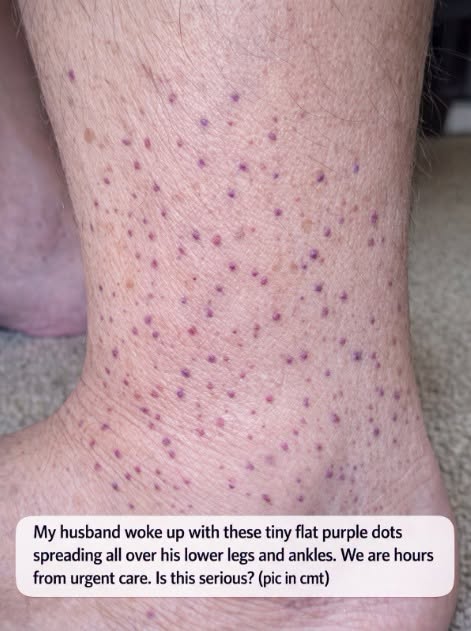
Have you noticed tiny purple or red dots spreading across your ankles or lower legs? It can be unsettling to see these marks appear suddenly, especially when you aren’t sure what caused them. While some skin changes are harmless, small, flat spots that don’t fade when pressed can sometimes be a sign of bleeding beneath the skin.
One possible cause is petechiae, tiny spots that develop when small blood vessels leak blood into the surrounding skin. They aren’t a condition on their own, but rather a sign that something else may be happening in the body. The cause can range from physical strain to a medical problem that needs prompt attention.
So, how can you recognize petechiae, what might cause them, and when should you seek medical help? Let’s look at the important details.
1. What Do Petechiae Look Like?
Petechiae are tiny, flat spots that may appear red, purple, or reddish-brown. They’re usually about 1–2 millimeters in size and can appear individually or in clusters.
Unlike many insect bites or allergic rashes, petechiae typically aren’t raised bumps. They may look like tiny pinpricks beneath the skin.
Common characteristics include:
Tiny spots: They often resemble small dots scattered across the skin.
Red or purple coloring: Their appearance can vary depending on skin tone and how long they’ve been present.
Flat texture: The skin usually feels smooth rather than swollen.
Little or no fading when pressed: Petechiae generally don’t blanch, meaning their color remains visible when pressure is applied.
Although these spots are often noticed on the ankles, feet, and lower legs, they can appear anywhere on the body.
Keep in mind that not every purple spot is petechiae. Other skin conditions can look similar, so appearance alone cannot confirm the diagnosis.
2. Why Do Tiny Purple Dots Appear on the Lower Legs?
The lower legs are a common place to notice certain types of small-vessel bleeding and inflammation. However, the location of the spots doesn’t necessarily reveal their cause.
Possible explanations include physical strain, medication effects, low platelet counts, infections, and inflammation affecting small blood vessels.
Sometimes, intense coughing, vomiting, or straining can cause petechiae. These spots often develop around the face and upper body, although the location can vary depending on the circumstances.
If the marks suddenly appear across both legs, spread toward the thighs, or begin showing up on other parts of the body, it’s important to take notice.
Don’t automatically assume that spreading spots are caused by tight socks, standing too long, or ordinary skin irritation. New or unexplained non-blanching spots may need urgent medical assessment, even if they don’t hurt.
3. What Can Cause Petechiae?
Several different conditions can cause tiny blood vessels to leak blood beneath the skin. Here are some of the possibilities.
Physical strain or pressure
Strenuous activity can sometimes contribute to petechiae. Forceful coughing, repeated vomiting, heavy lifting, and significant pressure or friction may cause small blood vessels to rupture.
When physical strain is responsible, the spots may be localized, and the person may otherwise feel well.
However, unexplained or widespread spots shouldn’t automatically be attributed to exercise or pressure without considering other causes.
Medication side effects