
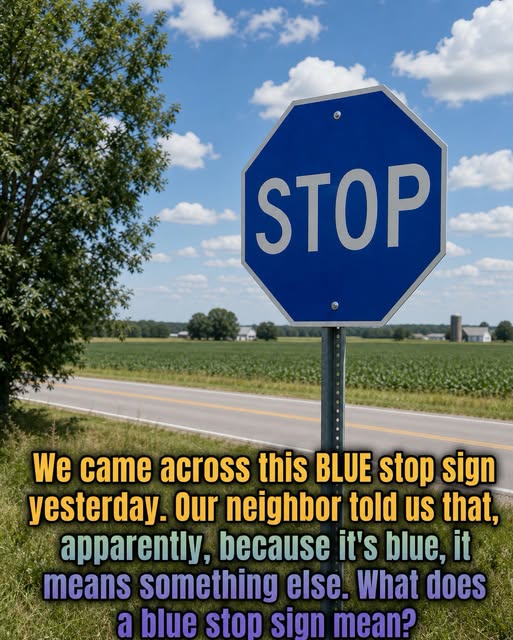
At 35 miles an hour, you don’t have time to debate a color. You see the octagon, but it’s wrong. Blue. Your brain screams “fake” while your gut whispers “what if you’re wrong?” One choice costs seconds. The other could cost everything—money, freedom, someone’s life. The law, the property owner, the insurance company, the ju…
A blue stop sign jolts you because it breaks the script your mind expects on the road. We’re trained to respond to a red octagon as danger, law, and urgency in one instant. Change the color and it feels optional, like a suggestion rather than an order. But the world behind that sign—private roads, gated communities, campuses, resorts, industrial sites—often runs on rules you don’t see until something goes wrong.
If you blow through a blue stop sign and hit a car, a child on a bike, or a worker in a loading zone, nobody in that moment cares that the sign wasn’t standard red. Investigators will ask whether a reasonable driver should have understood the message. Insurance adjusters, property managers, maybe even a judge will look at the same thing: an octagon, the word STOP, and your decision. Color doesn’t shield you from consequences. When the instruction is clear, the safest—and often smartest—answer is simple: stop.