
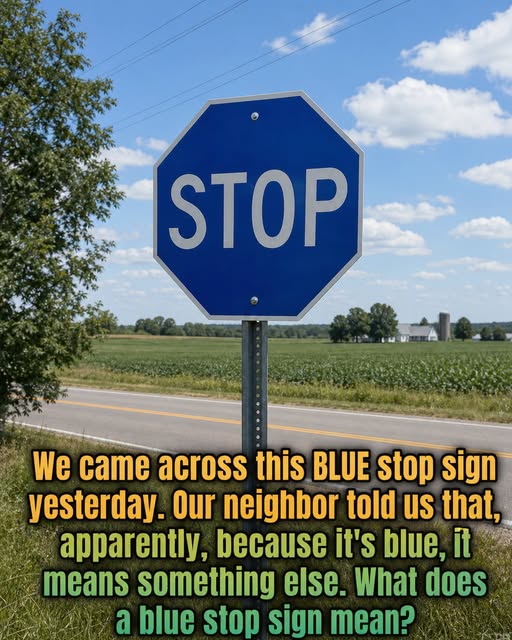
You’re driving, relaxed, on autopilot—until your brain slams on the brakes. A blue stop sign. Same shape. Same word. Completely wrong color. For a split second, you don’t trust your own eyes. Is it fake? A prank? A legal trap? That hesitation could cost you far more than a ticket. Because what you do next might decide who walks away from that intersection al…
That blue sign is not a glitch in reality; it’s a reminder that safety doesn’t always come in the standard colors you expect. On public roads in the United States, only red stop signs are official, standardized, and enforced as traffic control devices. But on private property—gated neighborhoods, campuses, resorts, ranches—a blue stop sign often serves the same practical purpose: making you pause before someone gets hurt.
The law may treat that blue sign differently from a government-issued one, but consequences don’t vanish just because the background isn’t red. Property rules, insurance claims, liability after a crash, or even being denied access can all turn on whether you ignored a clear instruction to stop. When your instincts argue with the color but the word is unmistakable, trust the message, not the paint. If the sign says STOP, stopping is still the smartest move.