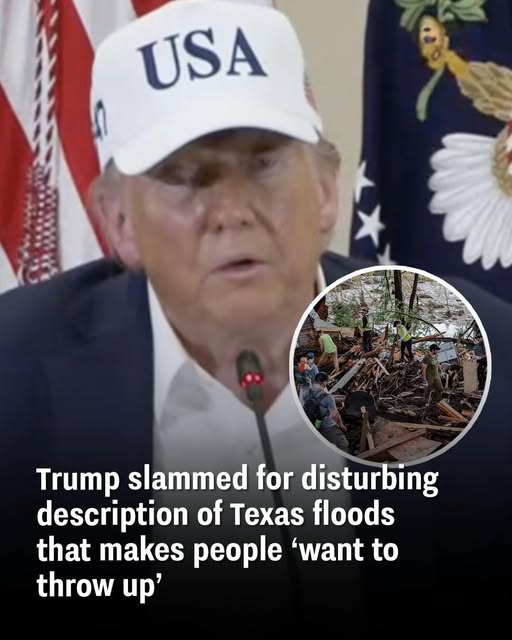
As devastating floods ravaged Texas over the July 4th weekend—claiming at least 129 lives and leaving more than 150 people missing—communities shattered by loss looked to their leaders for solace and support. The sudden overflow of the Guadalupe River swept away homes, businesses, and even a cherished summer camp, where young children tragically perished.
President Trump’s visit to the flood-stricken state began with acknowledgments of the catastrophe and promises of federal aid. But during a later press conference, he drew sharp criticism for an analogy comparing the deadly floodwaters to waves “even the best surfers would be afraid to surf.”
The remark ignited immediate outrage, with many branding it tone-deaf and deeply insensitive. Critics argued that likening a deadly disaster to an extreme sports challenge trivialized the profound suffering endured by victims and their families. Social media quickly erupted, with one user lamenting, “Trump’s out here describing floods like a ride at an amusement park. Meanwhile, people are drowning.”
This controversy has raised urgent questions about empathy and leadership in moments of crisis. While presidential visits are meant to comfort and unite, words carry weight—especially when lives hang in the balance. For many Texans, the analogy felt like a painful dismissal of their grief rather than a source of hope.
As recovery efforts press on, the call is clear: genuine compassion and thoughtful leadership must take precedence over careless rhetoric. In the face of tragedy, Texans need empathy—not empty comparisons.