
The Lillooet Landslide: Four Lives Lost, One Person Missing, and the Mountain Disaster That Changed Families Forever
CHAPTER 1: THE MOUNTAIN THAT CHANGED EVERYTHING
A beautiful highway with an unpredictable landscape
The stretch of Highway 99 near Lillooet, British Columbia, is among the most visually striking mountain routes in western Canada. Surrounded by towering mountains, dense forests, steep slopes, and dramatic valleys, the highway offers travelers an opportunity to experience the extraordinary natural beauty for which the province is internationally recognized.
Known along this section as Duffey Lake Road, the route serves both as a scenic destination and an important transportation connection. Residents, workers, tourists, and families regularly travel through the region, relying on the highway to reach neighboring communities and destinations across British Columbia.
For many travelers, the journey represents an ordinary part of life. Some are returning home after visiting relatives. Others may be traveling for work, taking a vacation, or simply enjoying the remarkable scenery.
However, beneath the beauty of British Columbia’s mountainous landscape lies a natural environment capable of changing dramatically under extreme weather conditions.
Mountain slopes that appear stable during ordinary weather can become increasingly vulnerable when exposed to prolonged and unusually heavy rainfall. Water can penetrate the ground, weaken soil, increase pressure within slopes, and contribute to conditions in which large quantities of earth and debris suddenly move downhill.
In November 2021, British Columbia experienced an extraordinary period of rainfall that placed enormous pressure on communities, transportation networks, and emergency services.
Among the most heartbreaking consequences was a devastating landslide that struck Highway 99 near Lillooet on November 15.
What had been a familiar mountain road became the location of a tragedy that would leave multiple families grieving and another desperately waiting for answers.
When extreme rainfall became a deadly emergency
The disaster occurred during a period of severe weather that affected extensive areas of British Columbia.
Heavy precipitation contributed to flooding, dangerous road conditions, infrastructure damage, and landslides. Communities across the province faced significant disruption as transportation routes became increasingly difficult or impossible to use.
The landslide near Lillooet was one of the most devastating incidents associated with those conditions.
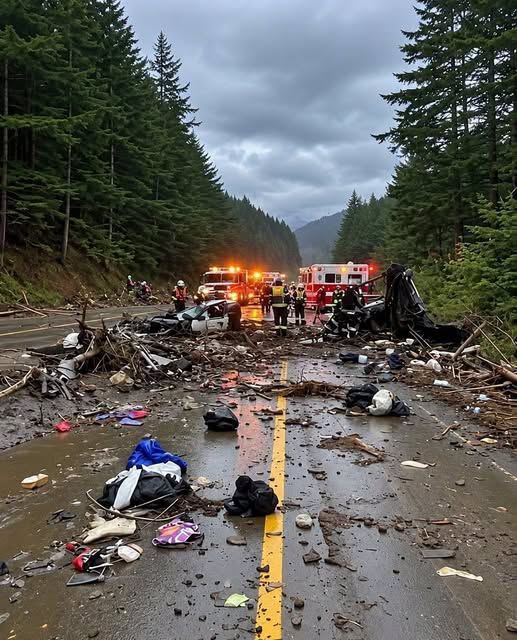
Earth, rocks, and other material moved across the highway, creating a dangerous environment for anyone caught within the affected area.
The event demonstrated how quickly an ordinary journey can become a life-threatening emergency.
Unlike many everyday hazards, a major landslide can develop with little opportunity for people in its path to escape. The movement of the landscape itself can overwhelm roads and surrounding areas, leaving behind conditions that are difficult for emergency responders to navigate.
The precise experiences of the individuals caught in the Lillooet disaster cannot be reconstructed without verified evidence. What became clear, however, was that the landslide had resulted in a serious loss of life and that several people had not been accounted for.
Emergency personnel were faced with the urgent responsibility of determining what had happened and locating those who remained missing.
For families awaiting information, the disaster marked the beginning of an extraordinarily painful period.
— Original image placement 1 —
The beginning of an agonizing wait
When a person disappears during a natural disaster, the people who love them are suddenly confronted with circumstances for which few can ever be prepared.
Ordinary routines lose their importance. Work commitments, household responsibilities, and everyday concerns can become secondary to a single overwhelming question: where is the missing person?
Relatives may repeatedly check their phones, follow official announcements, and contact authorities in the hope of receiving information.
Every passing hour can feel unusually long.
The absence of confirmed information creates a painful emotional conflict. Families may continue hoping that their loved one has survived while simultaneously recognizing the seriousness of the situation.
The November 15 landslide created precisely this kind of uncertainty.
After the first fatality was confirmed, four additional people were reported missing in connection with the incident.
Authorities began working to account for those individuals, but the landscape presented considerable challenges.
A major landslide does not leave behind an orderly environment. Roads may become unrecognizable, debris may conceal important areas, and flooding can complicate access.
Search personnel must assess these conditions carefully, balancing the urgency of finding missing people with the responsibility of ensuring that further lives are not placed in danger.
For the families, however, the technical complexity of the operation could not diminish the emotional urgency of their circumstances.
They needed answers.
The first devastating discovery
The first confirmed fatality was announced after the body of a woman was recovered on Monday.
Her recovery represented a heartbreaking development in the emergency response.
Until a death is confirmed, families and communities may continue holding onto the possibility that those caught in a disaster have survived.
The discovery of the woman made the deadly consequences of the landslide undeniable.
Behind that announcement was an individual whose life had been abruptly interrupted. She was not simply a statistic associated with a natural disaster. She was a person with relationships, memories, responsibilities, and people who cared about her.
The public announcement provided information about the tragedy, but it could never fully communicate the significance of her loss to those who knew her.
For the other families awaiting news, the discovery also underscored the seriousness of the conditions in which their loved ones had disappeared.
Authorities continued their efforts, and attention remained focused on locating the remaining missing individuals.
A search that continued through difficult conditions
As the operation progressed, responders faced the challenge of working within a landscape that had been significantly altered.
Landslides can redistribute large amounts of material, changing the physical appearance of an area and making familiar locations difficult to identify.
The presence of water can create additional complications, particularly when rainfall and flooding have already affected the surrounding terrain.
Search operations in such environments require careful coordination. Personnel must consider where they can safely work, what information is available, and whether particular areas can be examined without exposing responders to further danger.
These decisions can be difficult because the desire to locate missing people is accompanied by the responsibility to prevent additional tragedies.
The Lillooet operation continued over several days.
On Wednesday, another body was recovered.
On Thursday, two more bodies were located.
British Columbia Chief Coroner Lisa Lapointe confirmed the discoveries, bringing the total number of confirmed fatalities at that stage to four.
One person remained missing.
— Original image placement 2 —
A mountain road transformed into a place of remembrance
The landslide changed the meaning of Highway 99 for the families directly affected by the disaster.