
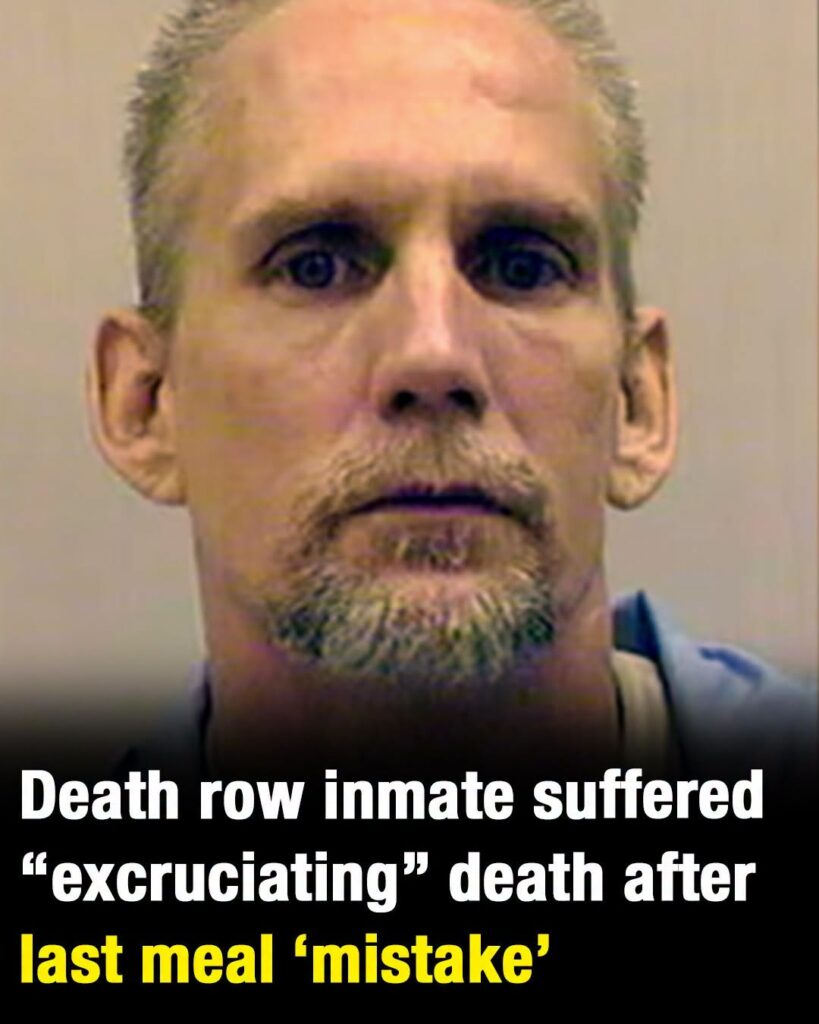
A death row inmate who reportedly asked prison staff to save part of his final meal for later may have misunderstood just how final his last meal would be. But the unusual request was only one disturbing detail surrounding his execution, as a later autopsy revealed that he may have experienced an agonizing death during the lethal injection.
Wesley Ira Purkey was 68 years old when he was executed by lethal injection in 2020, following years on federal death row. He had been sentenced to death in 2004 for the kidnapping, rape, and murder of 16-year-old Jennifer Long in Kansas City, Missouri, in 1998.
Jennifer’s disappearance began when she failed to show up for school after last being seen on January 22. When she did not arrive for class, concern quickly spread.
According to reports, Purkey approached the teenager outside a grocery store and persuaded her to get into his pickup truck. He then drove her to his home, where he raped and stabbed her to death.
The details of the crime were particularly disturbing. According to the Death Penalty Information Center, Jennifer’s remains have never been recovered, leaving her family without the opportunity to give her a proper burial.
However, Jennifer was not the only victim in Purkey’s criminal history.
Purkey Was Also Convicted of Killing an 80-Year-Old Woman
Years before his execution, Purkey was also convicted in the murder of 80-year-old Mary Bales, a polio survivor whom he had met while carrying out repair work at her home.
Prosecutors said Purkey returned to Bales’ property under the pretense of fixing a kitchen faucet. During the visit, he allegedly attacked her with a claw hammer, beating her to death.
The circumstances surrounding the discovery of her body were equally disturbing. Neighbors reportedly noticed Purkey attempting to burn her remains, which ultimately contributed to his arrest.
His convictions for the two murders led to years of legal proceedings before his execution was eventually carried out in 2020.
The Unusual Request He Made for His Last Meal
As the date of his execution approached, Purkey reportedly requested a pecan pie as part of his final meal.
However, it was another detail about the request that later attracted attention. According to reports, he asked prison staff to save a portion of the pie so he could eat it later.
The request appeared to suggest that Purkey either misunderstood the finality of the procedure or simply wanted to keep part of his dessert for another time.
Of course, there would be no opportunity to return to the remaining pie.
But while the unusual last-meal request became a memorable detail of the case, the circumstances surrounding Purkey’s actual execution proved considerably more disturbing.
A subsequent autopsy raised serious questions about the physical suffering he may have experienced after being administered the lethal injection drug pentobarbital.
Autopsy Revealed Signs of Severe Fluid Buildup in His Lungs
Purkey’s autopsy reportedly identified what medical experts described as “severe bilateral acute pulmonary oedema,” along with “frothy pulmonary oedema in trachea and main stem bronchi.”
In simpler terms, the findings indicated that fluid had accumulated extensively in both lungs and the airways following the administration of pentobarbital.
Pulmonary oedema is a serious medical condition in which fluid builds up in the lungs, making it extremely difficult to breathe. In severe cases, the sensation can resemble drowning or suffocation.
The findings prompted concerns about whether Purkey experienced significant physical distress during the execution, rather than simply losing consciousness before dying.
Dr. Gail Van Norman, a professor of anesthesiology and pain medicine, said the autopsy findings strongly suggested that Purkey was still alive when the fluid accumulation occurred.
According to VT, she warned that the effects of pentobarbital could cause prisoners to experience severe suffering during lethal injection procedures.
“It is a virtual medical certainty, that most, if not all, prisoners will experience excruciating suffering, including sensations of drowning and suffocation from [the lethal injection drug] pentobarbital,” she said.
The medical findings added another disturbing dimension to an execution that had already attracted attention because of the crimes for which Purkey had been sentenced to death.
His Final Words Included an Apology to Jennifer Long’s Family
Purkey was executed at a federal prison in Indiana in 2020.
Before his death, he was given an opportunity to make a final statement, during which he addressed Jennifer Long’s family and expressed regret for the suffering he had caused.
“I deeply regret the pain and suffering I caused to Jennifer’s family. I am deeply sorry. I deeply regret the pain I caused to my daughter, who I love so very much. This sanitized murder really does not serve no purpose whatsoever,” Purkey said.
His statement acknowledged the pain experienced by Jennifer’s relatives, while also expressing remorse over the impact his actions had on his own daughter.
However, for Jennifer’s father, William Long, the execution represented something deeply personal after years of living with the loss of his daughter.
Speaking to reporters following Purkey’s death, Long delivered a heartbreaking statement that reflected the anger and grief his family had carried for decades.
According to The New York Times, he said: “He needed to take his last breath, he took my daughter’s last breath.”
The words captured the devastating impact of Jennifer’s murder and the emotions surrounding the execution of the man responsible for her death.
Although Purkey’s execution brought an end to years of legal proceedings, the revelations in the autopsy report raised further questions about the physical experience of lethal injection and the suffering inmates may endure during the procedure.