
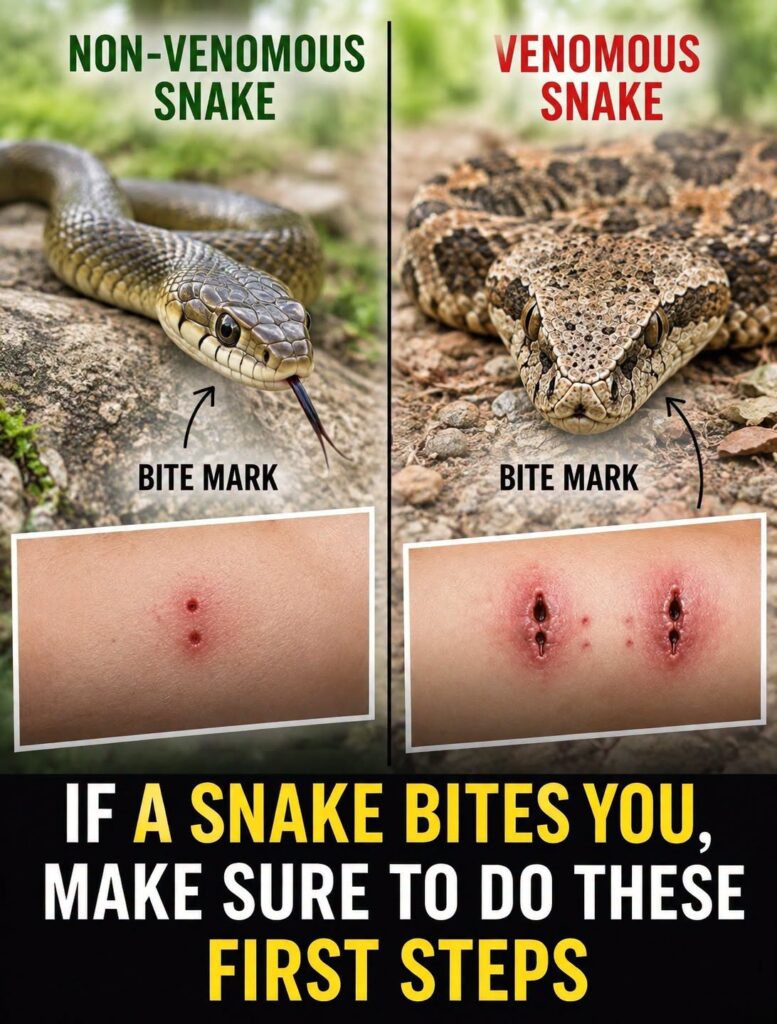
A snake bite can become a medical emergency before you realize how serious it is. Even without immediate symptoms, call emergency services, stay still, and seek urgent care rather than waiting for pain or swelling to appear. The danger is not just venom, but familiar remedies that can worsen injuries when every decision matters and fear suddenly takes cont…
After a suspected snake bite, professional assessment is essential—even if the snake is unidentified or the person initially feels well. Arrange emergency transportation and avoid walking if help is available. Keep the person calm and the bitten limb supported without unnecessary movement. Remove rings, watches, and tight items before swelling develops, and follow emergency dispatchers’ instructions. Observe the snake only from a safe distance; never try to catch, kill, or handle it.
Cutting the wound, sucking out venom, applying ice, or using a tourniquet can cause additional harm. Avoid alcohol, caffeine, and aspirin or anti-inflammatory painkillers unless a clinician advises otherwise. Hospital teams can monitor for delayed effects and provide antivenom when appropriate. For future outings, wear sturdy boots, use a flashlight at night, and check hidden spaces before reaching into them. The safest response is not a home remedy: it is protecting the injured person while getting expert help.