
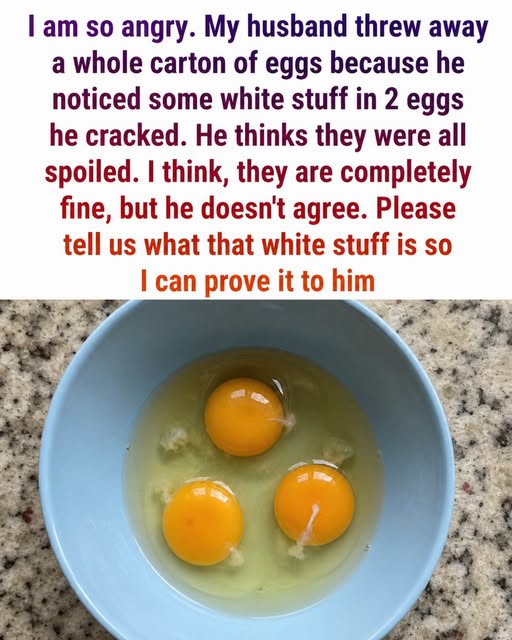
That strange white string in your egg is not the horror story you’ve been secretly dreading. It’s not a baby chick, not a worm, not some quiet sign your kitchen hygiene has finally failed. It’s something far stranger—and far more important. Because once you discover what it really reveals about freshness, safety, and the eggs you’re feeding your family, you may never crack a shell the same w…
That little white string has a name: chalaza. It isn’t a defect or a danger sign, but the egg’s built‑in seatbelt. Two twisted cords of protein anchor the yolk in the center, keeping it from smashing against the shell. In a fertilized egg, that gentle suspension helps protect a developing chick. In your frying pan, it simply melts into the white as it cooks, doing its job and disappearing without fanfare.
You’ve already eaten it thousands of times. That odd, ropey bit you may have picked out with a spoon is pure protein—and a quiet clue about quality. A firm, clearly defined chalaza means the egg is fresh; as eggs age, those strands fade and loosen. So the next time you crack one open and see that ghostly spiral clinging to the yolk, you can drop the worry, keep the egg, and get on with breakfast.