
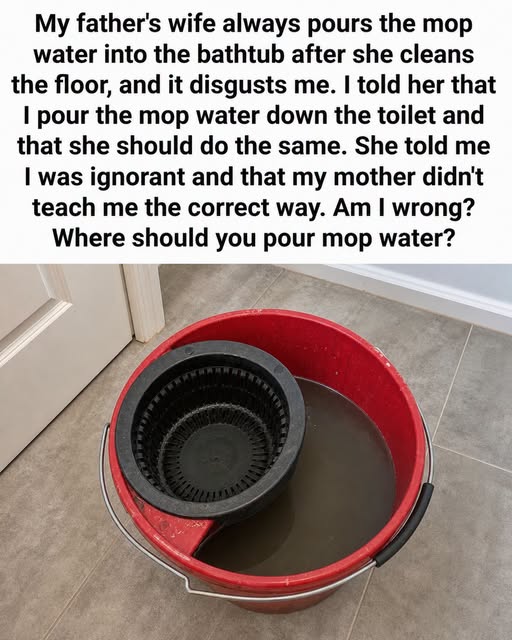
That bucket of gray water you’re about to dump is far filthier than it looks. Hair, bacteria, grease, and grit are all swirling inside it, waiting to end up in the worst possible place. One careless pour can contaminate where you cook, bathe, or even damage your plumbing. Most people get this simple choice wro…
That murky mop water deserves more thought than a lazy toss into the nearest sink. The safest place for it is a utility or laundry sink, if you have one; they’re built for dirty jobs and keep grime away from food and bathing areas. No utility sink? The toilet is a practical backup, with a wide drain and strong flush designed to handle suspended solids without fuss.
Before you pour, strain out hair, dust clumps, and debris to protect your pipes, and be mindful of harsh chemicals if you’re on a septic system. Avoid the kitchen sink, where you wash dishes and prep food, and be especially careful never to dump mop water into storm drains or onto the lawn, where cleaners can pollute waterways or harm plants. When you’re in someone else’s space, ask where they prefer it emptied. That one small habit quietly keeps homes cleaner, plumbing healthier, and shared spaces more hygienic for everyone.