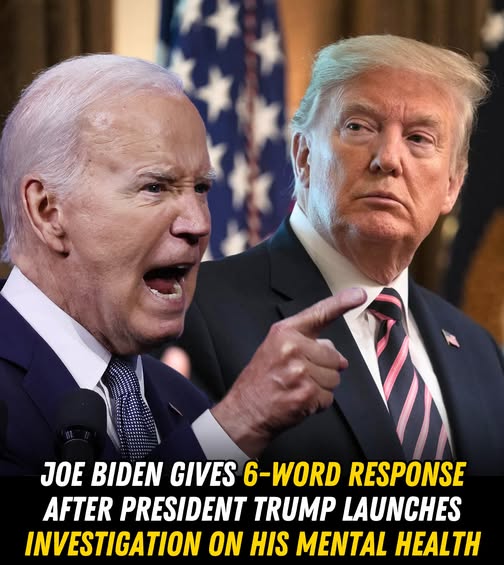
A Sharp Question Sparks Heated Debate
Tensions escalated after former President Donald Trump made a provocative claim that reignited questions about President Joe Biden’s leadership.
Speaking to supporters, Trump suggested that Biden may have used an autopen—a mechanical device that replicates signatures—to authorize executive orders, implying the President might not be personally involved in key decisions.
“What does the man in the Oval Office look like if someone else is signing executive orders?” Trump reportedly asked, stirring fresh doubts about Biden’s fitness for office.
Though he offered no concrete evidence, the accusation echoed longstanding concerns raised by critics about Biden’s capacity to lead.
“I Made the Decisions,” Biden Fires Back at Trump’s Autopen Claim
President Joe Biden didn’t hold back after Donald Trump implied he may not have personally signed key executive actions during his time in office.
In an interview with ABC News, Biden firmly dismissed the accusation:
“To be clear, I made the decisions during my presidency. I decided on the legislation, proclamations, executive orders, and pardons. The idea that I didn’t is absurd and untrue.”
The former president also brushed off Trump’s call for a mental fitness investigation, labeling it “nothing more than a mere distraction.”
Autopens: Legal but Still Controversial
While rarely a topic of public debate, the use of autopens by U.S. presidents is legally allowed under Justice Department guidelines—as long as the president authorizes their use.
Several previous administrations have employed the device for routine tasks, particularly when presidents were traveling or unavailable for manual signatures. Still, despite its legality, the autopen continues to raise questions about perception, presidential presence, and transparency.
Trump’s Criticism Isn’t About Legality — It’s About Perception
While the use of an autopen may be legal, Trump’s attack isn’t rooted in the law—it’s about optics. His remarks tap into a deeper, more politically potent concern: the perception of control.
In an era where image can be as powerful as policy, Trump’s challenge echoes the persistent doubts some voters have harbored about whether Biden was fully in command during his time in office.
From Well-Wishes to Watchdog
Interestingly, Trump’s tone hasn’t always been confrontational. Back in 2024, after Biden publicly disclosed a cancer diagnosis, Trump offered a rare moment of unity—expressing his support and wishing his political rival a full recovery.
But as the political battlefield heats up once again, compassion has given way to criticism. Today, Trump is not sending best wishes—he’s keeping watch, and asking the public to do the same.
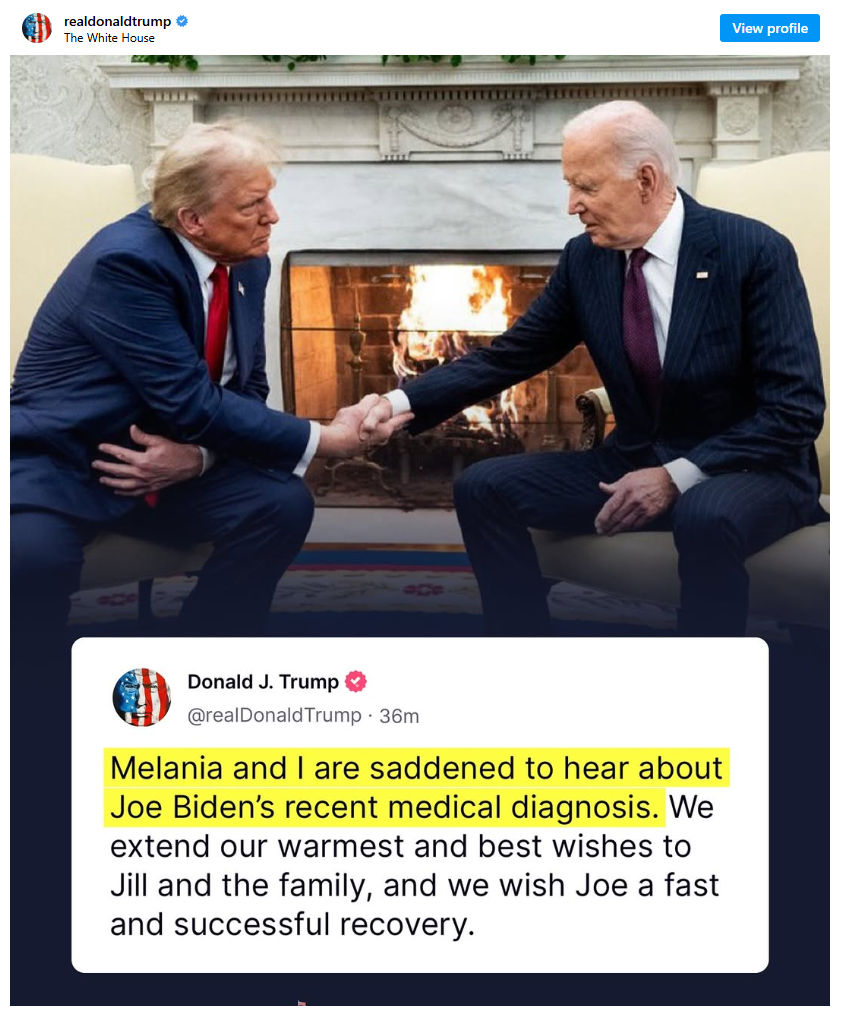
A Rare Moment of Civility
At the time of Biden’s medical diagnosis, Donald Trump struck a surprisingly compassionate note.
“The news of Joe Biden’s recent medical diagnosis saddens Melania and me. We wish Joe a speedy and full recovery and send our warmest regards to Jill and the family,” he said in a public statement.
It was an uncommon display of civility between two fierce political rivals—one that briefly captured the nation’s attention and drew praise across the political spectrum.
Civility Fades as Scrutiny Intensifies
But the tone has shifted dramatically. With Trump now back in the White House and campaign rhetoric reaching a fever pitch, scrutiny of the previous administration is intensifying.
The former president has once again seized the narrative, pushing controversial claims and signaling to voters that he’s willing to challenge the status quo—even if the facts remain debatable. Whether the autopen accusation sticks or not, Trump has made it clear: he’s not backing down from raising uncomfortable questions.