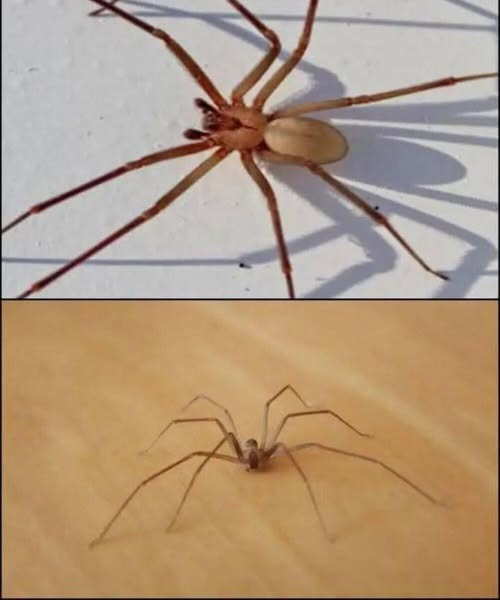
Beware the Brown Recluse: A Tiny Spider with a Dangerous Bite
It’s small, quiet, and prefers to stay out of sight. But don’t be fooled — one bite from the brown recluse spider can turn an ordinary day into a medical emergency.
Known for its elusive behavior and potent venom, this spider doesn’t hunt trouble, but when disturbed, it can deliver a bite that’s far from harmless.
Meet the “Violin Spider”
Nicknamed the “violin spider” for the distinctive violin-shaped mark on its back, the brown recluse is a master of disguise. Its velvety, light brown body ranges from about 8 millimeters to 1.5 centimeters — roughly the size of a dime — making it easy to miss in dark corners and shadows.
Unlike most spiders, which have eight eyes, the brown recluse sports just six eyes arranged in three pairs. This unusual feature helps experts identify it — but to anyone else, it just adds to its mysterious nature.
Where Does It Hide?
True to its name, the brown recluse is a solitary spider that shies away from people. It prefers quiet, undisturbed spots like:
- Closets
- Basements
- Attics
- Under furniture
- Storage boxes
- Behind wall outlets
- Inside shoes or clothing left untouched
Its favorite hiding places often lead to accidental encounters—usually when you reach into a dark space or slip on a shoe where the spider’s been quietly waiting.
The Danger: Its Bite
While it won’t seek you out, the brown recluse will bite if it feels trapped or threatened—such as when pressed against your skin. And that’s when trouble begins.
Its venom is necrotic, meaning it can destroy skin and tissue around the bite. At first, the bite might feel like a mild sting — easy to miss. But within hours, redness, swelling, and sharp pain can develop. In severe cases, a deep ulcer may form, sometimes lasting weeks or months and requiring medical treatment.
Signs to Watch For
If bitten, watch for symptoms like:
- Burning pain and redness
- Blister that turns into an open sore
- Fever or chills
- Nausea
- Muscle pain
Severe reactions are rare but possible, especially in children, seniors, or those with weakened immune systems.
What To Do If Bitten
If you think a brown recluse bit you:
- Clean the area gently with soap and water.
- Apply a cold compress to reduce swelling.
- Elevate the affected area, if possible.
- Seek medical care promptly—especially if the bite worsens or an ulcer forms.
Quick action can make a huge difference, so don’t delay.
How to Keep Brown Recluse Spiders Away
Mostly found in the south-central and Midwestern U.S., brown recluse spiders can hitch a ride elsewhere in boxes or furniture. Protect yourself by:
- Keeping storage and clutter under control.
- Avoiding leaving clothes or shoes on the floor.
- Always shaking out shoes and clothing before use.
- Sealing cracks and gaps in walls and baseboards.
- Wearing gloves when cleaning dark, dusty spots.
Respect This Quiet Threat
Small but dangerous, the brown recluse spider is a reminder that nature’s threats can come quietly and without warning. It prefers to stay hidden — but when disturbed, it can deliver a bite with serious consequences.
Stay alert. Know where it hides. Take precautions in your home. And if you suspect a bite, seek help fast.
Because when it comes to the brown recluse, prevention is always better than cure.