Tennessee Death Row Inmate’s Fight for Innocence Unravels, New Evidence Strengthens Case Against Him
Note: This story originally made headlines in May 2015 and is being republished for renewed public interest.
In a dramatic twist in the quest for justice, Tennessee death row inmate Marlon Kiser’s long battle to prove his innocence has unexpectedly reinforced the evidence of his guilt. Convicted in 2003 for the murder of Hamilton County Deputy Donald Bond, Kiser has persistently claimed he was framed by his former roommate, James Michael Chattin. However, his relentless efforts—spanning public campaigns, legal petitions, and a dedicated website—have ultimately backfired.
Kiser’s digital platform, FreeMarlonKiser.com, served as a bold declaration of his innocence. There, he accused Chattin of orchestrating the murder out of jealousy and rage, alleging that Chattin suspected Deputy Bond of having an affair with his wife, Tina Chattin. Kiser detailed chilling threats Chattin allegedly made:
“James Michael Chattin had discovered that a Hamilton County Sheriff’s Deputy named Donald Kenneth Bond Jr. was seemingly having an affair with Tina Chattin… On several different occasions, Mike Chattin has stated to several different individuals that his wife was seeing a cop and that he was going to kill him. And in the early morning hours of September 6th, 2001, that is exactly what Mike Chattin did.”
According to Kiser, Chattin exploited Kiser’s fraught history with law enforcement—stemming from a pending brutality lawsuit against the Chattanooga Police Department—to deflect suspicion:
“To throw suspicion off of Mike Chattin, he ran to police pointing his finger at me,” Kiser claimed, portraying himself as a convenient scapegoat.
The website also shared Kiser’s account of distancing himself from Chattin due to his drug abuse, a move he believed put him in danger:
“That was the straw that broke the camel’s back. In Mike Chattin’s perry old mind, he could not allow me to leave because I knew entirely too many secrets about him.”
Kiser even alleged that Chattin once asked him to kill Deputy Bond—an offer he refused.
Seeking justice beyond cyberspace, Kiser launched an online petition to halt his execution and push for a new trial or exoneration. The petition has attracted over 470 signatures, many citing alleged police corruption as a factor in his conviction. One supporter wrote:
“Marlon Kiser is on death row because of police corruption and ineptness. Marlon knew about Mike Chattin’s criminal activities and therefore was a liability to him.”
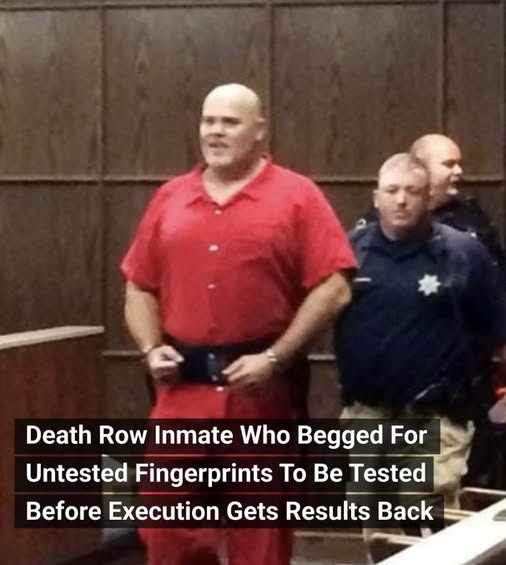
But Kiser’s legal maneuvering led to an unexpected setback. His defense team requested re-examination of palm and fingerprints found on Deputy Bond’s flashlight and patrol vehicle, hoping to clear his name. Instead, forensic experts confirmed the prints belonged to Kiser himself.
This new evidence, combined with previous findings—such as fibers from the deputy’s clothing found on Kiser—only reinforced the original verdict.
Legal analysts observe that while Kiser’s narrative raised important questions, the hard forensic facts consistently linked him to the crime scene. His impassioned efforts to rewrite the story could not withstand scientific scrutiny.
Kiser’s case remains a cautionary tale of how post-conviction campaigns can backfire when new evidence solidifies guilt rather than dispels doubt.
Despite the mounting proof, Kiser continues to assert his innocence from death row, convinced the full truth has yet to emerge. Whether his struggle will alter his fate remains uncertain, but for now, the courts stand by their judgment.