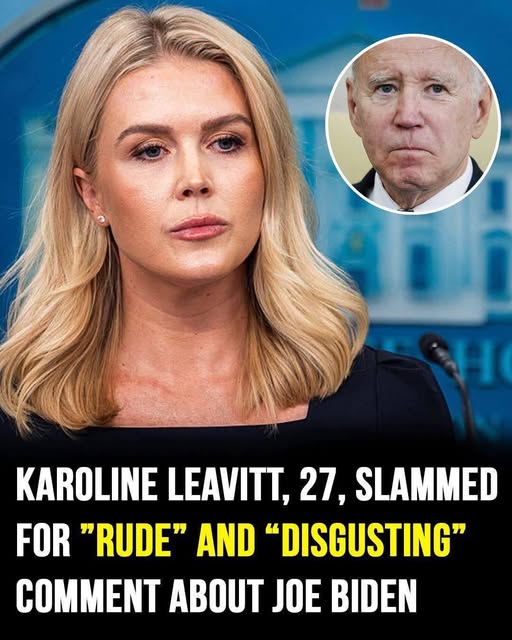
In a high-profile conversation hosted by Axios co-founder Mike Allen, White House Press Secretary Karoline Leavitt asserted that President Donald Trump’s administration is offering greater transparency and broader media access than President Joe Biden’s ever did.
Leavitt made her remarks during a media-focused event examining how presidential administrations engage with the press. The discussion ranged from daily briefings and press pool dynamics to the preservation of historic moments through photojournalism.
The conversation took a poignant turn when Allen brought up the now-iconic image of President Trump taken just moments after surviving an assassination attempt in Butler, Pennsylvania. Captured by Evan Vucci of the Associated Press, the photo has already become a symbol of resilience. Allen questioned whether evolving pool rotation rules might prevent such moments from being documented in the future.
Leavitt firmly rejected that notion.
“These aren’t restrictions,” she said. “They’re reforms meant to democratize access—inviting a wider array of outlets, including smaller and independent media, to participate in White House coverage.”
She criticized the traditional model, where a small group of legacy outlets—typically a 13-member rotating press pool—monopolized daily access to the president.
“Why should the same outlet be in the room every single day?” she asked. “We’ve opened the door to more voices, which is healthier for democracy and ultimately better for the American people.”
Leavitt didn’t shy away from drawing sharp comparisons between Trump and Biden on media openness. She accused the Biden administration of avoiding difficult questions and shielding the president from unscripted moments.
“President Biden went weeks, sometimes months, without taking questions,” she said. “When he did, it was often under tightly controlled circumstances. In contrast, President Trump actively engages—through gaggles, interviews, briefings, and unscripted Q&As.”
Since returning to office in 2025, Trump’s communications strategy has prioritized direct engagement, blending traditional press briefings with a strong social media presence and interviews across the political spectrum.
However, not everyone in the press corps sees the changes as positive. Allen referenced recent concerns raised by the White House Correspondents’ Association, which argued that some new policies—like reshuffling press pool rotations and altering briefing room seating—could create new hurdles for established media outlets.
Leavitt acknowledged the pushback but stood by the administration’s approach.
“The media landscape has changed,” she said. “It’s not just about the big networks and newspapers anymore. Independent journalists and digital platforms are producing high-quality reporting, and we’re making sure they’re included.”
She concluded by stressing that coverage of the Trump White House remains vigorous:
“The news is still getting out. Journalists are still doing their jobs—and we welcome that.”
As Trump continues his second term, the spotlight is once again on how the presidency interacts with the press—this time, with a fresh playbook and a broader invitation list.