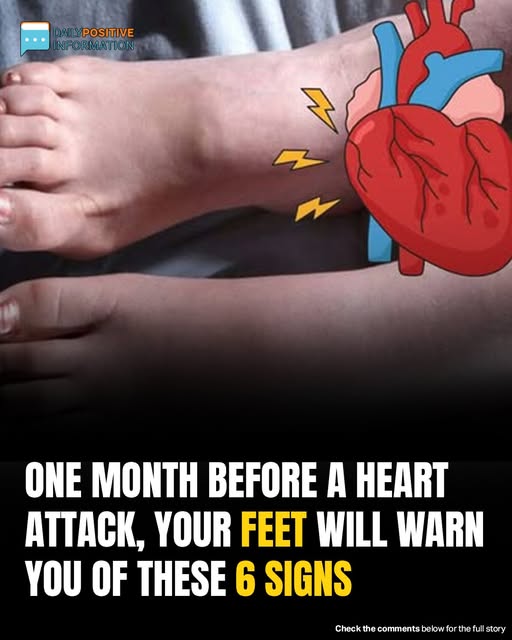
You rely on your feet every day—to walk, run errands, exercise, play sports, and even dance. But what if your feet could do more than just move you around? What if they could warn you about an impending heart attack?
Surprisingly, they can.
In some cases, your feet may start showing subtle signs up to a month—or even longer—before a heart attack occurs. These signs often go unnoticed, but they could reveal early clues about your cardiovascular health. While they don’t guarantee a heart issue, they may signal poor circulation or underlying heart problems that deserve your attention.
6 Silent Foot Symptoms That May Warn of a Heart Attack a Month in Advance
Your feet do more than just carry you through the day—they can also signal serious trouble brewing in your heart.
In the month leading up to a heart attack, your body might start dropping subtle hints. And surprisingly, your feet may be the first place those warnings appear. While these signs aren’t always definitive, they could point to poor circulation or underlying heart disease that shouldn’t be ignored.
Here are six foot-related symptoms to watch out for:
1. Cold Feet or Toes
If your feet stay cold—even in warm environments—it could mean your heart isn’t pumping blood effectively to your extremities. Poor circulation is often linked to heart failure or narrowed arteries.
2. Swollen Feet and Ankles (Edema)
Do your feet and ankles swell up by the end of the day or after long periods of sitting? That puffiness may be caused by fluid buildup, a common symptom of heart failure.
3. Discoloration (Blue, Purple, or Pale Feet)
A bluish or purplish hue could signal a lack of oxygen-rich blood reaching your feet. Pale or ashen feet may also point to poor circulation—both possible signs of heart trouble.
4. Numbness or Tingling
That pins-and-needles feeling or loss of sensation might be more than just annoying—it could be a sign of Peripheral Artery Disease (PAD), which is often linked to cardiovascular issues. Symptoms may worsen with movement and improve with rest.
5. Sores That Don’t Heal
Even small cuts or blisters on your feet that take forever to heal could indicate poor blood flow. Chronic ulcers or slow-healing wounds—especially in people with diabetes—are a red flag.
6. Pain While Walking (Claudication)
If your feet or calves cramp or ache when you walk, and the pain eases with rest, it might be PAD—a strong predictor of heart attacks and other serious heart conditions.
What Should You Do?
These signs don’t guarantee a heart attack is coming—but they do suggest your heart and blood vessels might be under stress.
If you experience any of these symptoms—especially if they’re new or worsening—don’t ignore them. See a healthcare provider promptly.
Also, be alert to other common heart attack symptoms like:
- Chest pain or pressure
- Shortness of breath
- Dizziness or fainting
- Extreme fatigue
Getting checked for high blood pressure, high cholesterol, diabetes, and heart disease could be life-saving.