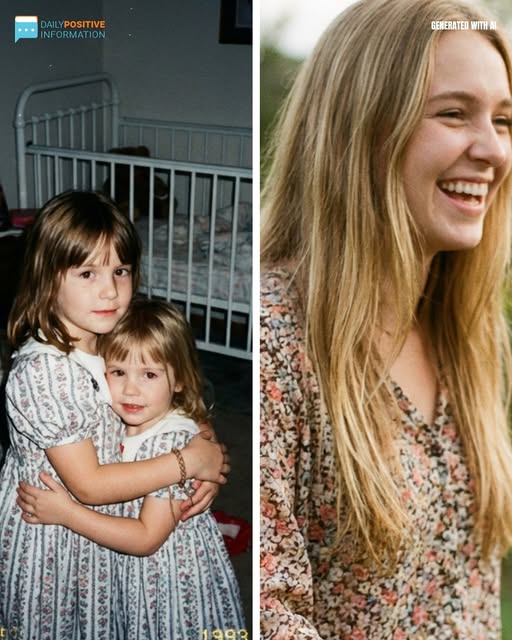
My name is Elena, and when I was eight years old, I made a promise to my little sister that I’d find her no matter what.
Then I spent the next thirty-two years failing to keep it.
The guilt of that broken promise followed me through three decades, two marriages, four cities, and countless sleepless nights when I’d wake up remembering the sound of her screaming my name as they pulled us apart.
Until a routine business trip and a random grocery store run changed everything.
Growing up in the children’s home meant we had nothing except each other
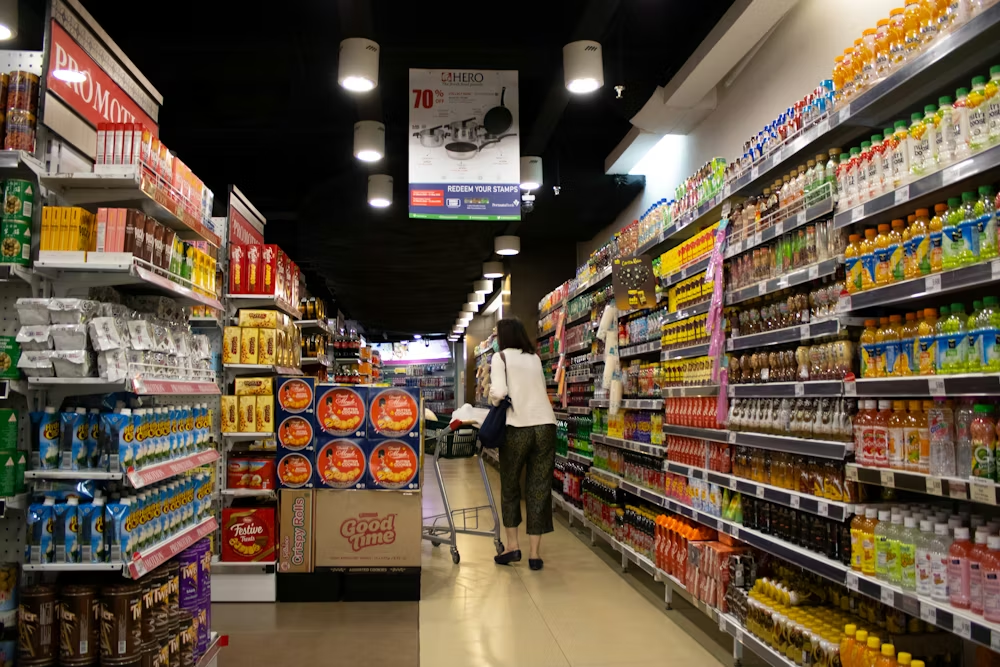
Mia and I grew up in a state-run children’s home in upstate New York. Not an orphanage in the Victorian sense—no dramatic stone buildings or cruel headmistresses—just a crowded, underfunded group home where twenty-three kids shared four bedrooms and the staff rotated every six months.
We didn’t know our parents. There were no names in our files, no photographs tucked away for “someday,” no comforting story about how they’d loved us but circumstances were just too difficult.
Just two narrow beds pushed against opposite walls of a room we shared with four other girls, and a couple of lines in a manila folder that might as well have said “origin unknown.”
From the moment Mia arrived when she was two and I was six, we became inseparable.
She followed me everywhere—down the hallways with their peeling linoleum, into the cafeteria where we’d learned to grab the good bread rolls before they ran out, to the corner of the playroom where I’d read to her from donated books with pages missing.
She’d cry if she woke up from a nap and couldn’t immediately see me. Would grab my hand in a death grip whenever a stranger walked through during visiting hours. Slept better if I sang to her, even though I can’t carry a tune to save my life.
I learned to braid her fine brown hair using just my fingers because we weren’t allowed to take the combs out of the bathroom. I learned which staff members would look the other way if I snuck extra snacks for her. I learned that if I smiled and answered the social workers’ questions properly, they were nicer to both of us.
We didn’t dream big back then. We didn’t fantasize about fancy houses or rich families or anything from the storybooks.
We just wanted to leave that place together. That was the whole dream.
Then one Tuesday in March, everything fell apart.
The day the couple came to visit, I didn’t know they were there to take me away
A couple came to tour the facility that afternoon. I remember them clearly even now—the woman wore a camel-colored coat and pearl earrings, and the man had one of those voices that carried, deep and confident. The kind of people who looked like they belonged in the adoption brochures the home kept in the lobby.
They walked through with Mrs. Patterson, the director, nodding and smiling as she showed them the playroom, the classrooms, pointed out different children.
I was reading to Mia in our usual corner, acting out the voices from a beat-up copy of “Where the Wild Things Are.” Mia was laughing at my terrible monster impression.
The couple stopped to watch us. I remember the woman whispering something to her husband. I remember forcing my best smile, the one I’d practiced, and answering politely when they asked me questions about the book.
I thought maybe—just maybe—they were interested in both of us.
Three days later, Mrs. Patterson called me into her office.
The room smelled like artificial air freshener and stale coffee. She sat behind her desk with that expression adults get when they’re about to deliver news they’ve convinced themselves is good.
“Elena,” she said, her smile too wide, too forced, “a family wants to adopt you. Isn’t that wonderful? This is such exciting news.”
My stomach dropped. “What about Mia?”
Her smile flickered for just a second before reassembling itself.
“They’re not ready to take two children right now,” she said in that carefully neutral tone. “Your sister is still very young. Other families will come for her. You’ll probably see each other again someday.”
“I won’t go,” I said, my voice barely above a whisper. “Not without her.”
The smile vanished entirely.
“Elena, you don’t get to refuse this opportunity,” she said, her voice taking on steel beneath the gentleness. “You need to be brave.”
I learned that day that “be brave” was adult code for “do what we’ve decided regardless of how you feel.”
The day they took me, my sister screamed so loud I can still hear it three decades later
The adoptive parents—the Harpers—came to collect me on a gray Saturday morning two weeks later.
I’d tried everything in those two weeks. Begging Mrs. Patterson. Refusing to pack. Hiding in the supply closet. None of it worked.
When the day came, Mia understood something was terribly wrong the moment she saw my small duffel bag by the door.
“No,” she said, her four-year-old voice going high and panicked. “No, Lena, you can’t go. You promised. You promised you’d stay.”
“I don’t want to go, Mia. They’re making me.”
She wrapped her arms around my waist and screamed. A raw, desperate sound that made every adult in the room flinch.
“Don’t go, Lena! Please don’t go! I’ll be so good, I promise! Please!”
I held her as tightly as I could, memorizing the feel of her small body against mine, the smell of the cheap shampoo they used on all the kids, the way her hands clutched the back of my shirt.
“I’ll find you,” I kept saying, over and over like a mantra. “I promise, Mia. I’ll come back for you. I’ll find you no matter what.”
A staff member had to physically pry her fingers from my clothes. Mrs. Patterson held Mia back while Mr. Harper guided me toward the door with a hand on my shoulder.
Mia was still screaming my name when they put me in their Volvo sedan and pulled away from the only home I’d ever known.
That sound—her voice breaking as she cried “LENA!” over and over—followed me for thirty-two years.
My new family gave me everything except permission to remember where I came from
The Harpers lived in a suburb of Hartford, Connecticut. Nice neighborhood. Good schools. A bedroom that was just mine, with matching furniture and curtains I got to pick out myself.
They weren’t bad people. They fed me well, bought me clothes that fit, made sure I did my homework, took me to the dentist regularly. They called me lucky at least once a week.
They also made it very clear that my past was something to be left behind, not discussed.
“You don’t need to think about the children’s home anymore,” my adoptive mother would say whenever I brought up Mia. “We’re your family now, Elena. Focus on your future, not your past.”
I learned English grammar at my new school. I learned how to fit in with kids who’d never shared a bedroom with five other children. I learned that talking about my sister made conversations awkward and uncomfortable, made my new parents exchange those looks across the dinner table.
So I stopped mentioning her out loud.
But in my head, in my dreams, in quiet moments when I was supposed to be paying attention to something else, Mia never stopped existing.
The day I turned eighteen, I took a bus back to the children’s home.
My first attempt to find her ended with two words that crushed me: sealed file
The building looked smaller than I remembered, more run-down. Different staff members who didn’t recognize me. New kids playing in the yard where Mia and I used to draw with chalk.
I walked into the administrative office and told the woman at the desk my story. My old name, my new name, my sister’s name, the year we were separated.
She disappeared into a back room and returned fifteen minutes later with a thin manila folder.
“Your sister was adopted about six months after you left,” she said, her tone professional and detached. “Her name was legally changed as part of the adoption. Her file is sealed. I’m not authorized to share any information beyond that.”
“Is she okay?” My voice cracked. “Can you at least tell me if she’s alive? If she’s safe?”
She shook her head, and I saw genuine sympathy in her eyes for just a moment.
“I’m sorry. I truly am. But I can’t share anything else.”
I tried again when I was twenty-three, after my first marriage fell apart and I needed something to focus on besides my own failures. Same response. Sealed file. Changed name. No information available.
It was like someone had taken an eraser to my sister’s existence and written a completely new life over the top, and I wasn’t allowed to know a single detail about it.
Meanwhile, my own life continued in that relentless way lives do whether you’re ready or not.
I finished college with a degree in business administration. Got a job at a marketing firm in Boston. Got married too young to someone who seemed stable, got divorced three years later when we both admitted we’d made a mistake. Moved to Philadelphia. Got promoted. Learned to cook more than ramen. Started therapy.
From the outside, I looked like a functional adult woman with a normal, slightly boring corporate job and a reasonably well-adjusted life.
Inside, I never stopped being an eight-year-old girl who’d failed to protect her little sister.
The random moments were the worst—seeing sisters together and remembering what I’d lost
Some years, I’d spend months obsessively searching online adoption registries and reunion websites, sending messages to administrators, paying for background check services that led nowhere.
Other years, I couldn’t handle hitting the same dead end again and would avoid anything adoption-related entirely.
But the random moments were the hardest.
I’d be walking through Target and see two sisters arguing over which cereal to get, and I’d have to leave my cart and walk out because my chest felt too tight to breathe.
I’d see a little girl with brown pigtails holding her big sister’s hand at the park, and I’d have to look away before the tears started.
A colleague would complain about her sister borrowing clothes without asking, and I’d smile and nod while thinking “at least you know where she is.”
Mia became a ghost I couldn’t properly mourn because I didn’t know if she was alive or dead, happy or suffering, still thinking about me or having completely forgotten the sister who’d abandoned her.
Fast-forward to last October. I was forty years old, divorced, childless, working as a senior marketing manager for a mid-sized tech company.
My boss sent me on a three-day business trip to Rochester, New York—not even an interesting city, just a place with an office park, a Hampton Inn, and one halfway decent coffee shop according to Yelp.
The business trip that changed everything started with me just looking for dinner
I flew in on a Tuesday evening, checked into the hotel, sat through three hours of budget meetings that could have been emails, and finally escaped to my room around seven p.m.
I was tired, hungry, and mentally rehearsing my presentation for the seven a.m. meeting the next day. The hotel restaurant looked depressing, so I googled nearby options and found a Wegmans supermarket about half a mile away.
The walk did me good—crisp October air, leaves turning orange and red, a break from recycled hotel air conditioning.
Inside Wegmans, I grabbed a basket and started gathering the components of a sad hotel-room dinner: pre-made salad, a sandwich, some fruit that would probably go bad before I could finish it.
I turned into the cookie aisle, thinking I’d earned some kind of sugar after those meetings.
That’s when I saw her.
A little girl, maybe nine or ten years old, stood in the middle of the aisle staring at two different packages of cookies with the kind of intense concentration usually reserved for major life decisions. She had brown hair in a ponytail and wore a purple jacket that was slightly too big for her.
She reached up to grab one of the packages, and her jacket sleeve slid down her arm.
I saw the bracelet.
And I stopped walking so abruptly that the woman behind me almost crashed her cart into mine.
The bracelet on that little girl’s wrist was impossible—but there it was
A thin bracelet woven from red and blue thread, the colors faded but still distinct. The pattern was uneven, the knots messy, the whole thing clearly handmade by someone who had no idea what they were doing.
It wasn’t just similar to the bracelets I’d made thirty-two years ago.
It was identical. Same colors. Same sloppy tension. Same ugly knot at the clasp.
When I was eight years old, the children’s home had received a donation box full of craft supplies. I’d stolen some embroidery thread from the pile when no one was looking—red and blue because those were Mia’s favorite colors.
I’d spent hours in the playroom trying to copy the friendship bracelets I’d seen older girls wearing, watching YouTube tutorials on the ancient computer in the corner when staff wasn’t monitoring.
They came out crooked and too tight because I had no idea about proper tension. The knots were clumsy because I’d never done anything like it before.
I made two. I tied one around my own wrist and pulled it tight. I tied the other around Mia’s tiny wrist.
“So you don’t forget me,” I told her, crouching down to her level. “Even if we end up with different families, you’ll have this. And I’ll have mine. And we’ll remember.”
She was still wearing hers the day the Harpers took me away. I’d worn mine until I was thirteen, until the thread finally frayed and broke and I’d cried for an hour before putting the pieces in a box I still kept in my closet.
And now, thirty-two years later, in a random Wegmans in Rochester, I was staring at what appeared to be my sister’s bracelet on a stranger’s wrist.
My hands actually started tingling, like my body recognized something my brain was still trying to rationalize.
I stepped closer, my heart pounding so hard I could hear it.
“Hey,” I said, trying to keep my voice gentle and not sound like a complete lunatic. “That’s a really cool bracelet.”
The girl looked up at me, curious but not afraid. “Thanks! My mom gave it to me.”
“Did she make it?” I asked, holding my breath.
She shook her head. “She said someone really special made it for her when she was little. Like, a really long time ago. And now it’s mine. I have to be super careful with it because if I lose it, she’ll be really sad.”
I laughed, even though my throat was so tight I could barely breathe. “That sounds important.”
“It is,” she said seriously. “It’s like, the most important thing I own.”
“Is your mom here with you?”
“Yeah, she’s just grabbing cereal.” She pointed down the aisle.
I looked.
A woman was walking toward us, a box of Cheerios in one hand, scrolling through her phone with the other.
Dark hair pulled back in a messy ponytail. No heavy makeup. Jeans and sneakers. Probably early to mid-thirties.
And something in my chest lurched violently.
Every detail about this stranger felt terrifyingly familiar
Her eyes. The way she walked. The slight tilt of her head when she was concentrating. The shape of her eyebrows.
All Mia. All the features I remembered from a four-year-old’s face, just aged into adulthood.
The little girl ran over to her. “Mom, can we get the chocolate chip cookies? Please?”
The woman looked down at her daughter and smiled, and that smile hit me like a physical punch because I’d seen it a thousand times before on a much smaller face.
Then she looked up at me, polite curiosity in her expression.
“Hi,” I said, my voice coming out strangled. “Sorry to bother you. I was just admiring your daughter’s bracelet.”
She glanced down at the red-and-blue threads on her daughter’s wrist and her smile softened.
“She’s completely obsessed with that thing,” she said. “Won’t take it off, even to shower.”
“Because you said it’s really important,” the girl reminded her.
“That’s true,” the woman admitted. “It is important.”
I swallowed hard. “Did someone give it to you? When you were younger?”
Her expression shifted slightly, like she was trying to figure out if this was normal grocery store small talk or something else.
“Yeah,” she said slowly. “A long time ago.”
“In a children’s home?” The words came out before I could stop them.
Her face went pale. All the color drained out of her cheeks in an instant.
Her eyes snapped to mine, suddenly sharp and focused.
“How do you know that?” she asked, her voice barely above a whisper.
“Because I grew up in one too,” I said, and my whole body was shaking now. “And I made two bracelets exactly like that one. I made them out of red and blue thread when I was eight years old. One for me, and one for my little sister.”
The silence stretched between us for what felt like an eternity but was probably only three or four seconds.
“What was your sister’s name?” she asked.
“Mia,” I said. “Her name was Mia.”
She looked like she might faint.
“What was your name?” she whispered.
“Elena.”
Her daughter’s eyes went wide. “Mom, that’s—”
“I know, Lily,” the woman said, her voice shaking.
She looked at me like I was a ghost she’d been simultaneously hoping for and dreading for decades.
“Elena?” she said, my name coming out broken. “It’s really you?”
“I think so,” I managed. “Are you—”
“Yeah,” she said, tears already streaming down her face. “I’m Mia.”
We just stood there in the cookie aisle at Wegmans like complete idiots, crying in front of the Oreos while her daughter looked between us with her mouth hanging open and shoppers gave us a wide berth.
We moved our reunion to the terrible café attached to the store
“Can we talk?” Mia finally asked. “Not here?”
“Yes. Please. Anywhere.”
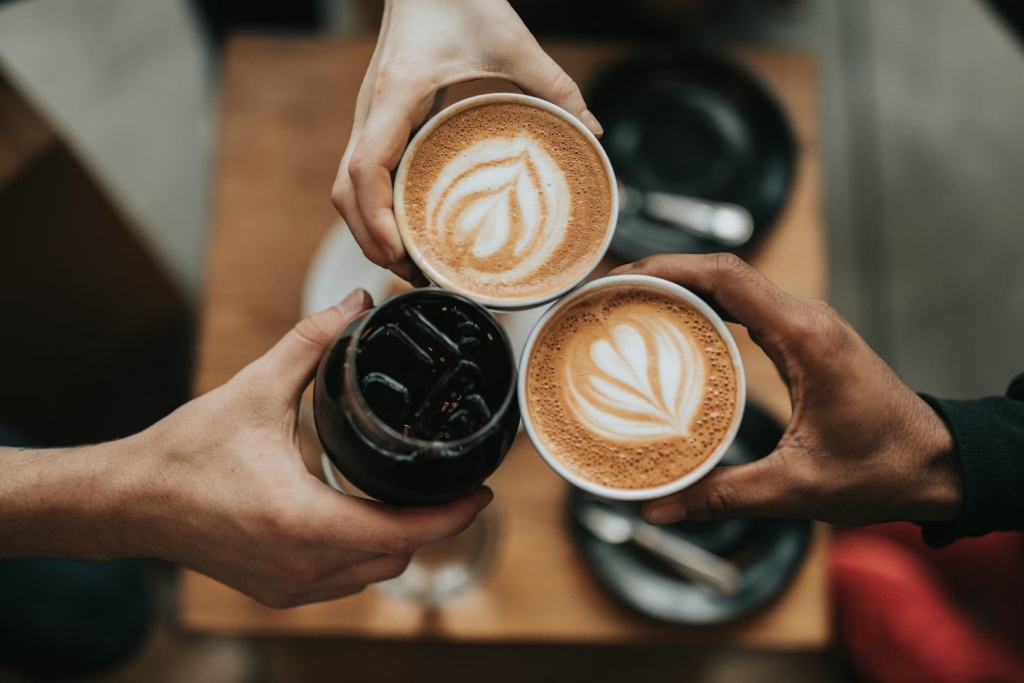
We checked out—I don’t even remember what I bought—and walked to the sad little café attached to the supermarket. The kind of place with laminate tables and coffee that tastes like it was brewed yesterday.
We sat at a wobbly table near the window. Lily got hot chocolate and looked like she was watching the most interesting movie of her life. Mia and I ordered coffee that we didn’t touch.
Up close, every single doubt evaporated.
Her nose, slightly crooked from when she’d fallen off the playground equipment when she was three. Her hands, long fingers just like mine. Her laugh, nervous and higher-pitched when she was anxious.
All Mia. Just older.
“What happened after I left?” she asked. “They told me you went to a good family and that was the end of the story.”
“I got adopted by a couple in Connecticut,” I said. “They moved me out of state. They didn’t want to talk about the children’s home or you. When I turned eighteen, I went back. They said you’d been adopted, that your name had been changed, that your file was sealed. I tried again when I was twenty-three. Same answer. I thought maybe you didn’t want to be found.”
Her eyes filled with fresh tears. “I got adopted about six months after you left. They changed my last name to Morrison. We moved to Pennsylvania, then Ohio, then here. Every time I asked about my sister, they’d say ‘that part of your life is over’ and change the subject.”
“When I got older, I tried looking you up,” she continued. “But I didn’t know your new last name or what state you were in or anything. I thought maybe you’d forgotten about me.”
“Never,” I said firmly. “Not for a single day.”
We both laughed at that, the kind of painful laugh you do when something hurts but also feels right.
“What about the bracelet?” I asked, nodding to Lily’s wrist.
Mia looked at her daughter. “I kept it in a jewelry box for years. It was the only thing I had from before. It didn’t fit anymore, but I couldn’t throw it away. When Lily turned eight—the same age you were—I gave it to her. I told her it came from someone very important. I didn’t know if I’d ever see you again, but I didn’t want it to just disappear.”
Lily held out her arm proudly. “I’m taking really good care of it. See? It’s still perfect.”
“You’re doing an amazing job,” I said, my voice cracking.
We talked until the café workers started cleaning up around us
We sat in that terrible café until the workers started mopping the floors and giving us pointed looks.
We talked about our lives. Jobs and marriages and divorces. Mia’s daughter. My lack of children. Partners who’d come and gone. Cities we’d lived in. Stupid little memories that matched perfectly.
The chipped blue mug that everyone in the children’s home fought over because it was the only one without a crack.
The hiding spot under the back staircase where we’d go when things got overwhelming.
The volunteer named Mrs. Chen who always smelled like oranges and would sneak us extra graham crackers.
Before we left, Mia looked at me with tears streaming down her face and said, “You kept your promise.”
“What promise?”
“You told me you’d find me,” she said. “You did.”
I started crying all over again because technically I hadn’t found her—a random business trip and pure chance had—but I understood what she meant.
I hugged her, and it was weird hugging what was essentially a stranger who also happened to be the most important person from your childhood, but it was also the most right thing I’d felt since I was eight years old.
We exchanged numbers, addresses, email, every possible form of contact we could think of like we were afraid the other would disappear if we didn’t anchor ourselves to each other immediately.
Rebuilding a relationship after 32 years apart is harder than finding each other was
We didn’t pretend those thirty-two missing years hadn’t happened.
We started small. Texts throughout the day. Phone calls on weekends. Photos of our lives—my apartment, her house, Lily’s school events, my office.
The first time we tried to video chat, we both cried so hard we couldn’t actually talk for ten minutes.
We’re still figuring it out. We’ve both built entire lives that existed without the other person in them, and now we’re trying to stitch those lives together without ripping anything that’s already there.
Mia lives in Rochester with her daughter. I live in Philadelphia. We visit when we can manage the time and plane tickets—Christmas, spring break, long weekends when work allows.
It’s not the fairy-tale reunion where we immediately slot back into who we were. We’re different people now. She calls me Elena, not Lena. I have to remind myself that she’s not four anymore and doesn’t need me to protect her.
But she’s also still Mia. Still makes the same face when she’s thinking hard. Still laughs at the same stupid jokes. Still my sister.
Lily asked me last month if I’d come to her school’s family day. I cried in the hotel bathroom for twenty minutes before saying yes.
For thirty-two years, I carried the weight of that failed promise, that moment in the parking lot when Mia screamed my name and I couldn’t do anything to help her.
Now when I think about that day, there’s a new image layered over it:
Two women in a grocery store café, laughing and crying over terrible coffee while a ten-year-old girl guards a faded red-and-blue bracelet like it’s the most valuable treasure in the world.
Because it is.
That bracelet was the thread that connected us across three decades. The promise that turned out to be true.
I didn’t find my sister through years of searching or hiring investigators or any of the things I’d tried.
I found her because she kept a bracelet I’d made with eight-year-old hands, and she loved her daughter enough to pass it on.
Sometimes the promises we keep find their own way of coming true.
Have you ever been separated from a loved one and wondered if you’d ever see them again? What do you think about this story of two sisters reconnecting after 32 years? Share your thoughts on our Facebook video and let us know how this reunion made you feel.
If this story touched your heart or reminded you of the importance of family connections, please share it with your friends and family. Sometimes the most impossible reunions happen in the most ordinary places.