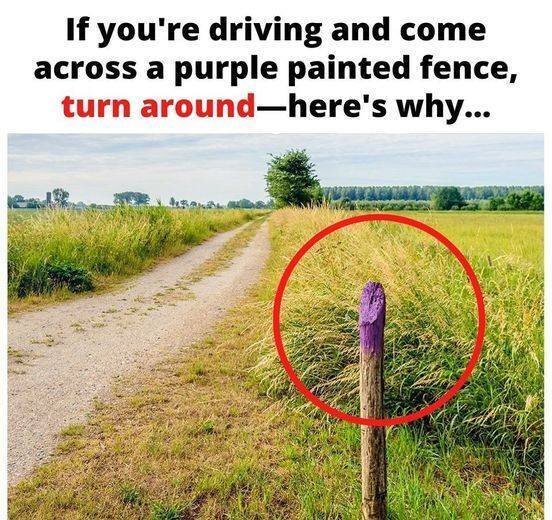
Purple fences are more than an eye-catching decoration—they send a clear message. Across many U.S. states, the “Purple Paint Law” allows landowners to mark their private property using purple paint on fences, posts, or trees as an alternative to traditional “No Trespassing” signs. Unlike signs, which can be damaged, stolen, or blown away, purple paint is permanent, visible, and unmistakable.
Purple was chosen for its high visibility against natural landscapes like forests or fields. Unlike green or brown, it stands out, and it avoids confusion with common warning colors such as red or orange. These painted markers carry the same legal authority as posted signs, meaning trespassing can result in fines, legal action, or even arrest.
The law usually specifies how the paint should be applied—covering details like height, width, and spacing—to make the warning clear to anyone passing by. For landowners, purple paint is a durable and cost-effective way to protect property, livestock, and privacy. For hikers, hunters, or campers, it’s a clear signal to respect boundaries.
But purple fences are more than a legal tool—they’re a statement. They communicate that the landowner values privacy and expects others to honor it. Seeing a purple fence is both a warning and a lesson in courtesy, reminding everyone that property lines exist for safety and respect. In essence, purple fences combine practicality with symbolism, helping ensure that outdoor exploration remains safe, lawful, and considerate.