Tensions between Israel and Iran have escalated sharply, with recent missile strikes fueling fears of a larger conflict. Adding to the turmoil, former President Donald Trump authorized attacks on key Iranian nuclear facilities—moves that have sent shockwaves through news outlets and social media alike.
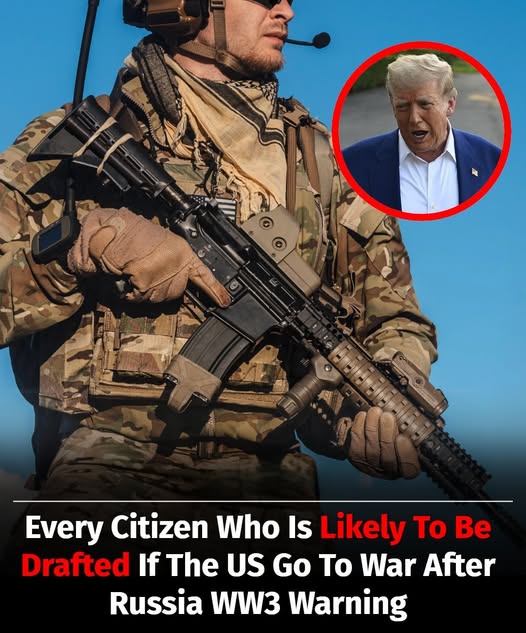
As anxiety mounts over the possibility of World War III, many Americans are asking a pressing question: If war breaks out, who will be called upon to defend the nation?
On June 21, the U.S. launched a bold military operation dubbed “Operation Midnight Hammer,” striking three critical Iranian nuclear sites—Fordow, Natanz, and Isfahan. Sanctioned by President Trump, this decisive action aims to halt Iran’s advancing nuclear weapons program and prevent a potential threat from escalating further.

In a bold message posted on Truth Social, former President Donald Trump announced:
“We have completed our very successful attack on the three Nuclear sites in Iran, including Fordow, Natanz, and Esfahan. All planes are now outside of Iran airspace. A full payload of BOMBS was dropped on the primary site, Fordow. All planes are safely on their way home.”
Trump didn’t mince words in his warning:
“ANY RETALIATION BY IRAN AGAINST THE UNITED STATES OF AMERICA WILL BE MET WITH FORCE FAR GREATER THAN WHAT WAS WITNESSED TONIGHT. THANK YOU! DONALD J. TRUMP, PRESIDENT OF THE UNITED STATES.”
Just hours later, Trump criticized both Iran and Israel for breaking a ceasefire that had been recently established that very morning.
“Israel, as soon as we made the deal, they came out and dropped a load of bombs, the likes of which I’ve never seen before—the biggest load we’ve ever seen,” Trump told reporters. “I’m not happy with Israel.”
He went on bluntly:
“You don’t go out in the first hour and just drop everything you have on them. So I’m not happy with them. I’m not happy with Iran either.”
Wrapping up his candid assessment, Trump declared:
“We basically have two countries that have been fighting so long and so hard that they don’t know what the f* they’re doing.”**
Later that week, during a NATO summit in the Netherlands, Trump was asked about Russian President Vladimir Putin’s intentions and whether he considered Putin an enemy. According to The Independent, Trump replied:
“It’s possible. I consider him a person who I think is misguided.”
He also suggested Putin wants out of the conflict:
“He would like to get out of this thing. It’s a mess for him.”
Meanwhile, NATO leaders at the summit agreed on a major boost to defense budgets—signaling growing concern over global security as tensions rise.

Global Leaders and Military Experts Sound the Alarm
As tensions escalate worldwide, Russian General Apti Alaudinov voiced a chilling warning that many have feared: we might already be living through World War III—whether we realize it or not.
Meanwhile, the United States is ramping up its military presence. Two powerful aircraft carrier strike groups—the USS Nimitz and the USS Carl Vinson—have been deployed to the Middle East, standing ready should the conflict spiral further, according to The National Interest.
Despite former President Trump’s earlier promises to end the so-called “forever wars,” today’s global reality is far more complex. And if a full-scale war does erupt, the U.S. may face the unprecedented step of reinstating the military draft for the first time since 1973.
The Draft: Who Could Be Called to Serve?
The Selective Service System, established over a century ago in 1917, remains the framework for potentially calling Americans back to military service. During the Vietnam War, nearly 2 million men were drafted through this system.
Currently, all male U.S. citizens aged 18 to 25 are legally required to register with Selective Service—including undocumented immigrants, refugees, and green card holders. Failure to register can result in fines up to $250,000.
If a draft is triggered during wartime, a lottery based on birth dates would determine the order in which individuals are called to serve. Typically, 20-year-olds are drafted first, then the lottery moves up and down the age range.
Each selected individual must pass rigorous physical and mental health screenings. Those deemed unfit or medically exempt would be excused or deferred.
While there have been discussions about extending the draft to include women, no laws have yet been enacted to make this a reality.

Who Could Be Exempt or Deferred?
If the draft is reinstated, certain groups might qualify for exemptions or delays in service, including:
- Conscientious objectors who oppose war on moral or religious grounds
- Full-time students eligible for postponements until their education is complete
- Parents and caregivers with dependent children, often granted hardship deferments
- Essential workers in healthcare, utilities, tech, and other critical infrastructure
- Ministers and certain elected officials serving key societal roles
- Dual nationals under specific conditions
Students can request draft postponements, and those selected can seek reclassification. For example, a draftee may claim conscientious objector status before reporting for duty.
Additionally, individuals institutionalized before age 18 and remaining so until 26 might be exempt from registering for Selective Service altogether.
History Could Be Repeating Itself
The last U.S. military draft ended in 1973, officially halted by Secretary of Defense Melvin Laird. The final draftee was Dwight Elliott Stone, a 24-year-old apprentice plumber from Sacramento, California, who reported for duty on June 30, 1973.
Now, with global tensions escalating and military deployments intensifying, old fears about conscription are resurfacing. The current climate feels eerily reminiscent of the early days of previous world conflicts—only with a 21st-century backdrop.
One user on X (formerly Twitter) captured the mood bluntly:
“If only Donald Trump was President then World War 3 wouldn’t have just started in the Middle East. Oh.”
So far, President Trump’s administration hasn’t reinstated the draft, and no bills are actively moving through Congress to bring it back. However, some former lawmakers and officials have floated the idea of a “national service mandate.”
According to The Washington Post, a few Republican leaders are beginning to explore this possibility more seriously as global risks grow.