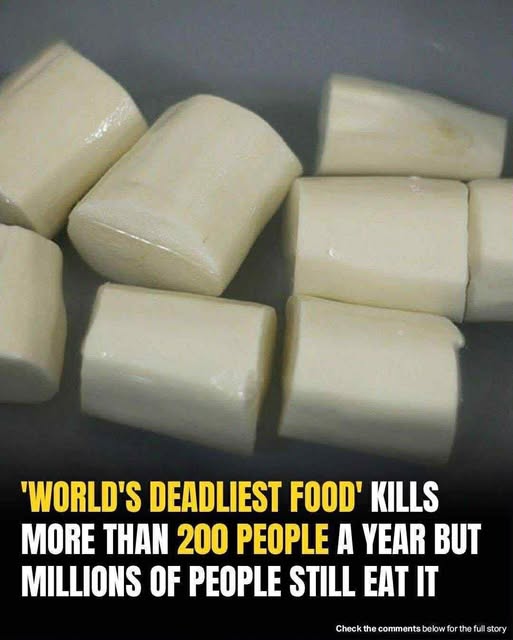
Cassava: The Staple That Feeds Millions—But Claims Lives Each Year
Cassava, a starchy root native to Central and South America, feeds over 500 million people worldwide and remains a dietary cornerstone across tropical regions—from Nigeria to Thailand to Indonesia.
Packed with vitamin C and copper, this humble tuber is often used like a potato and offers impressive nutritional benefits. But behind its role as a global staple lies a deadly risk.
Cassava has earned the nickname “the world’s deadliest food”—not because of how it tastes, but because of what lurks inside when it’s consumed raw or improperly prepared. The root contains cyanogenic glucosides, compounds that can release lethal cyanide during digestion if not carefully processed.
According to the World Health Organization (WHO), roughly 200 people die every year from cassava-related cyanide poisoning—many of them in impoverished areas where traditional processing methods are skipped out of urgency or lack of resources.
The plant’s toxins are a natural defense mechanism, but when famine, war, or food shortages push people to cut corners, the consequences can be devastating. In some cases, consumption of poorly prepared cassava leads to konzo, a sudden and irreversible paralysis of the legs. This neurological disorder strikes hardest in areas suffering from malnutrition and extreme poverty, often appearing in outbreaks.
Despite these risks, cassava can be perfectly safe—and even beneficial—when properly prepared. Traditional techniques like peeling and soaking the root for 24–48 hours, followed by boiling or sun-drying, can remove most of the dangerous compounds. When processed correctly, cassava becomes a reliable source of carbohydrates, fiber, and essential minerals, making it both nourishing and life-sustaining.
For millions, cassava is more than food—it’s survival. But it’s a survival that depends on knowledge, tradition, and care.