
A man deported under former President Trump’s immigration crackdown is speaking out about his terrifying ordeal inside what many call the “worst prison on Earth.”
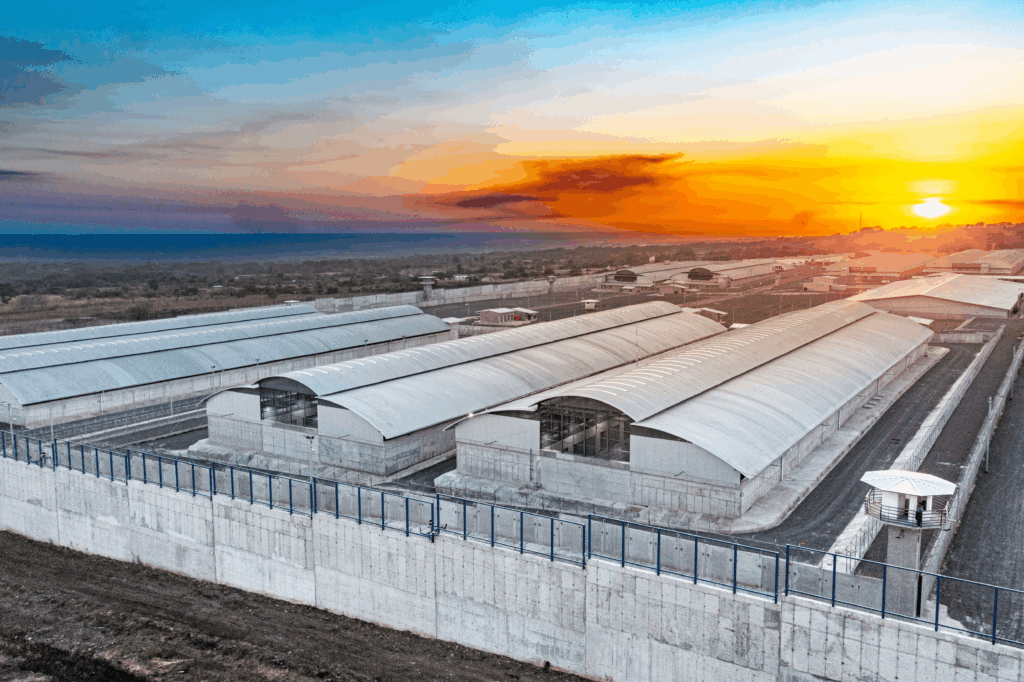
He was sent to El Salvador’s maximum-security facility, Centro de Confinamiento del Terrorismo (CECOT)—a prison the Bukele government proudly unveiled in 2023 as part of its sweeping war on gangs.
CECOT, located in Tecoluca, is a fortress designed to hold up to 40,000 of the country’s most violent offenders. It’s also touted as one of the most secure prisons in the world.
With 19 towering guard posts and a constant watch by heavily armed security teams, detainees live under relentless surveillance in a place built for control—not compassion.
Arturo Suarez, a 34-year-old aspiring singer, was filming a music video in North Carolina when his life took a terrifying turn. In March, U.S. immigration authorities detained him as part of a Trump-era initiative aimed at removing suspected gang members—including Americans—from the streets.
Suarez, one of 250 Venezuelan men swept up in the crackdown, was accused of being part of the notorious Tren de Aragua gang—a claim authorities based solely on his 33 tattoos. But his family insists he had never been convicted of a crime in any of the four countries he has lived in.
He was deported to El Salvador and thrown into Centro de Confinamiento del Terrorismo (CECOT)—a massive, high-security prison widely considered one of the harshest in the world.
For nearly five months, Suarez endured what he describes as a living nightmare.
“We were constantly beaten,” he told Sky News. “We suffered physical, verbal, and psychological abuse. The first thing the prison head said after the first beating was, ‘Welcome to hell.’”
Inside CECOT, Suarez shared a cramped cell with 18 other men. Inmates were punished for speaking too loudly or bathing more than once a day—with beatings and the removal of basic necessities like mattresses.
“The punishment was severe. They beat us, humiliated us, and took away our food,” he recalled. “One time, a cellmate politely asked if we could bathe again after exercising. That was enough to trigger more abuse.”
After nearly half a year, Suarez was finally released as part of a prisoner swap deal, in exchange for ten U.S. citizens and permanent residents held in Venezuela.
Now free, Suarez is speaking out—not only to clear his name, but to shed light on what he calls a brutal and unjust system that punished him for the way he looked, not for anything he did.
“His exact words were, ‘That’s your problem. It’s not my problem if you exercise,’” Suarez recalled. “We were forced to eat with our hands. No utensils, no dignity.”
The conditions were designed not just to punish—but to strip away their humanity.
“They tried to take our humanity from us,” he said. “They wanted us to lose everything.”
Back home, Suarez’s young family suffered too. His wife, Nathali, and their 10-month-old daughter, Nahiara, remain in Chile, while his relatives in Venezuela are now helping him rebuild his life—physically, emotionally, and financially.