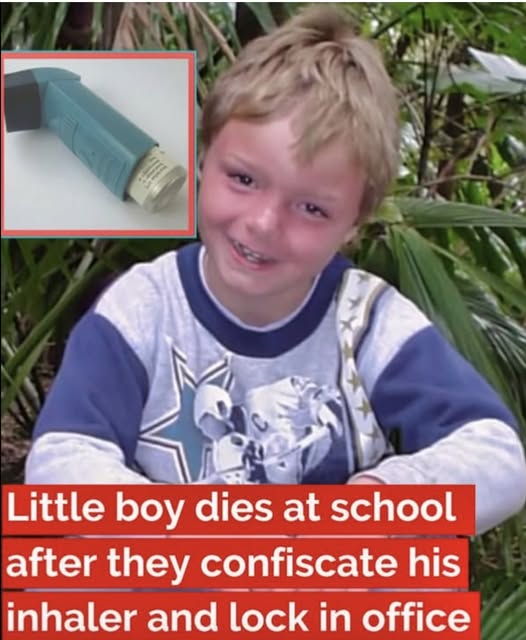
Asthma attacks can turn deadly in an instant.
The heartbreaking loss of 12-year-old Ryan Gibbons is a powerful reminder of this harsh reality.
Ryan was a vibrant, adventurous boy who loved riding motorbikes and exploring the woods. But one tragic mistake would cost him his life.
In 2012, Ryan suffered a severe asthma attack at school.
Instead of using his inhaler early on to stop the attack, the device had been taken from him — a decision that proved fatal.
On October 9, 12-year-old Ryan Gibbons, a seventh grader, headed to school like any other day.
But that day would change everything — Ryan would never come home.

While playing soccer at school, Ryan suddenly suffered a severe asthma attack — but his rescue inhaler was locked away in the school office, out of reach.
Desperately needing his inhaler to open his airways and breathe, Ryan was left helpless.
The school’s strict policy kept inhalers locked in the principal’s office, and Ryan’s spare inhalers had been repeatedly confiscated.
A group of his friends bravely tried to carry him to the office, but time ran out before they could reach the life-saving medication.
Ryan lost consciousness — and tragically, he never regained it.

The tragedy unfolded at Elgin County School in Ontario, Canada, sending shockwaves across the nation.
An investigation revealed that, despite repeated requests from Ryan’s mother and a doctor’s note, the school refused to let him carry his inhaler.
To work around this strict rule, Ryan often brought an extra inhaler to school secretly, hoping to protect himself.

Asthma attacks can strike without warning, making it dangerously risky to keep inhalers locked away.
Yet, the school repeatedly confiscated Ryan’s extra inhaler.
Ryan’s mother, Sandra Gibbons, recalled multiple calls from the school asking her to come pick up inhalers that Ryan had brought — inhalers he wasn’t even allowed to take home.
“You’d give him an inhaler, but then he’d get caught with it, and it would be taken away,” Sandra told CBC.

“Then I’d get a phone call. It was incredibly frustrating. I didn’t understand why — I didn’t even realize the policy required prescribed medication to be kept in the office,” Sandra Gibbons explained.
But Ryan’s heartbreaking death sparked a powerful movement.
Determined to prevent other families from enduring the same pain, Sandra vowed to fight for change.
After the funeral, she launched a petition urging the Ontario government to mandate standardized asthma management plans in schools.
She also pushed all political parties to support a private member’s bill introduced by Progressive Conservative Jeff Yurek — aiming to save lives through stronger protections.

“When Ryan passed away, it felt like I lost everything I lived for,” Sandra Gibbons shared with Allergic Living. “After burying my son, I knew his attack was preventable. If people had proper training and recognized the signs when a child is in distress, he would still be here today.”
Determined to protect other children, Sandra fought to change the laws that prevent asthmatic kids from carrying their life-saving inhalers.
Her tireless advocacy soon brought real change.
Now known as Ryan’s Law, Bill 135 has been passed with unanimous support in the legislature — a lasting legacy born from a mother’s heartbreak and hope.

The law now requires schools to allow children to carry their inhalers in their pockets or backpacks — as long as they have a doctor’s note.
“I’m definitely overwhelmed, very emotional, but incredibly happy that this is finally happening,” Sandra Gibbons said.
The Asthma Society also praised the bill’s passage. Its president, Dr. Rob Oliphant, emphasized, “It is essential that children with asthma have immediate access to potentially life-saving medications while at school.”
Across the United States, every state has laws allowing students to carry their asthma inhalers with them at all times.
Yet, despite these protections, many children are still denied access to their life-saving medications during the school day. Some schools enforce strict anti-drug policies that unintentionally ban inhalers.
Asthma remains a serious threat—claiming the lives of more than 10 Americans every single day.
While death rates have decreased over the past decade, every asthma-related death is one that could potentially be prevented.

I’m truly sorry to hear about Ryan’s story — it’s heartbreaking when a simple oversight turns tragic.
Though Ryan’s fate is deeply tragic, his story became a catalyst for change, saving the lives of thousands of children with asthma.
Thanks to his mother’s tireless fight for justice, many more needless tragedies have been prevented. It’s a relief and a hope that lawmakers have now passed “Ryan’s Law.”
Let’s share this article to honor Ryan’s memory and raise awareness about the critical importance of keeping inhalers close for those who need them.