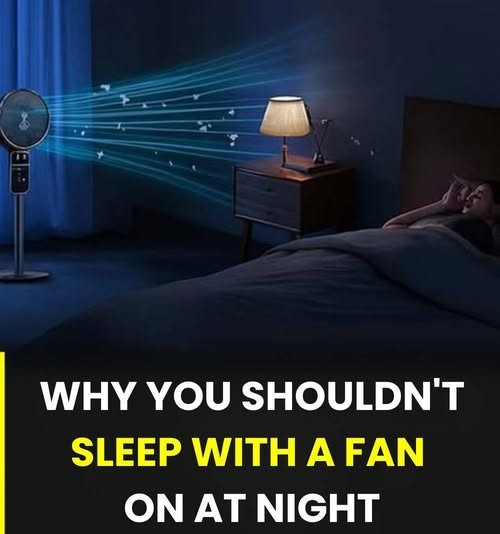
For many people, falling asleep without the steady hum of a fan feels impossible. The airflow feels cooling, the white noise is comforting, and it quickly becomes part of a nightly routine. But while it may seem harmless, sleeping with a fan blowing all night can quietly affect how your body feels by morning in ways most people don’t connect to the fan itself.
One of the biggest issues is how constant airflow dries the air around you. As the fan circulates air, it can leave your skin, eyes, and throat feeling dry or irritated when you wake up. Some people notice congestion, a scratchy throat, or stiff muscles without realizing the moving air has been hitting the same spot for hours. That steady breeze can cool parts of your body unevenly while you sleep.
Fans also stir up dust, pollen, and other particles that settle in bedrooms. Even a clean-looking room can have allergens resting on surfaces. When the fan runs all night, those particles stay airborne longer, making them easier to breathe in. This can leave some people waking up feeling stuffy, tired, or foggy without knowing why.
There’s also the issue of muscle tension. Prolonged exposure to cool air can cause muscles to tighten while you sleep, especially in the neck and shoulders. That’s why some people wake up sore or stiff after a night with the fan blowing directly on them. It’s subtle, but over time, it can become a pattern that’s hard to ignore.
This doesn’t mean fans are bad or should never be used. The key is awareness and moderation. Adjusting the fan’s direction, using a timer, or relying more on ventilation can make a difference. Sometimes, better sleep isn’t about adding more comfort—but removing small habits that quietly work against you overnight.