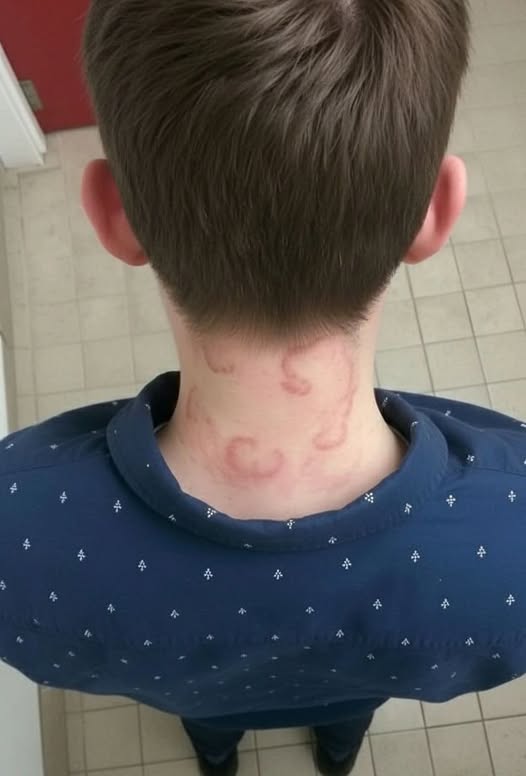
It began as a footnote in a daily routine—a localized, seemingly trivial itch that garnered little more than a passing scratch. At the outset, the skin reaction presented as a minor irritation, characterized by a sporadic redness and swelling that would flare up without warning and vanish just as abruptly.
To the untrained eye, the sensations—a sharp burning, a restless tingling, or a prickling beneath the dermis—felt like a fleeting inconvenience. For many, such symptoms are easily dismissed as a passing allergy, perhaps a reaction to a specific meal, an environmental shift, or contact with a new detergent. But for one man, this was not a temporary grievance; it was the opening chapter of a complex and persistent medical odyssey.
What started as a simple irritation rapidly matured into a recurring, widespread crisis. The visible markers were deceptive: small, raised patches of pink or red would bloom across the skin, fading into normal tissue or leaving behind faint, ghostly discolorations. These “wheals” were unpredictable—some round, others jagged and irregular—migrating across the body from day to day. It was this volatility that bred a deep sense of psychological exhaustion; the patient never knew where the next flare-up would strike.

The Diagnostic Turning Point
While mild skin irritations are often ignored, these persistent symptoms were a physiological distress signal. Following a clinical consultation, the patient received a diagnosis that provided both clarity and a new set of anxieties: urticaria, commonly known as hives.
As a journalist covering health for a decade, I’ve learned that hives are frequently misunderstood as a superficial cosmetic issue. In reality, they are a complex immune-mediated reaction. The primary actors are mast cells—specialized immune cells embedded in the skin and various tissues. While designed to defend against infection, in urticaria, these cells malfunction, inappropriately discharging histamine and other inflammatory mediators into the system.
When histamine enters the bloodstream, it causes capillaries to leak, leading to fluid accumulation in the upper dermal layers. The result is the signature raised, intensely itchy welt. However, the severity is a spectrum. While some suffer only localized reactions, others face systemic flare-ups that consume large portions of the body.
When the Swelling Goes Deep: The Danger of Angioedema
For this patient, the condition soon breached the surface. The swelling migrated from the skin’s exterior to the deeper tissues of the lips, eyelids, hands, and feet. This is medically identified as angioedema, a profound swelling of the mucous membranes and sub-dermal layers.
Angioedema is not merely uncomfortable; it is potentially lethal. When it targets the face, tongue, or throat, it can obstruct the airway within minutes. The patient described a terrifying shift in sensation: a tightening in the throat, a heavy puffiness around the eyes, and lips that became visibly distorted. The annoyance of an itch was replaced by the visceral fear of suffocation. Simple acts—speaking, eating, or swallowing—became high-stakes gambles, as every flare-up carried the shadow of anaphylaxis, a severe, life-threatening allergic reaction.
Hunting for Triggers in a Haystack
The medical investigation into the “why” proved as grueling as the symptoms themselves. The catalysts for urticaria are vast:
- Dietary: Nuts, shellfish, eggs, and synthetic preservatives.
- Pharmacological: Antibiotics, NSAIDs (like ibuprofen), and certain analgesics.
- Biological: Viral, bacterial, or parasitic infections that hijack the immune response.
- Physical: Environmental triggers such as pressure, extreme cold, heat, or even sunlight.
Furthermore, the “stress-itch cycle” is a documented phenomenon; psychological distress can exacerbate the immune system’s volatility, prolonging flare-ups. Yet, despite exhaustive testing, many cases remain idiopathic—a medical term meaning the cause is unknown. For those with chronic urticaria (persisting beyond six weeks), the journey can last months or even years, whereas acute urticaria typically resolves within a month.
The Multi-Layered Defense Strategy
Managing the condition required more than a single pill; it demanded a comprehensive tactical shift. Antihistamines served as the frontline defense, often prescribed at high doses to block the receptors driving the itch and swelling. In more aggressive phases, corticosteroids were introduced to forcefully dampen the inflammatory surge.
But medication was only half the battle. The patient had to become a student of his own body. He learned to monitor for “early warning” swelling and was educated on the necessity of immediate emergency intervention should breathing become labored.
The treatment escalated as the condition persisted. When standard antihistamines failed, leukotriene receptor antagonists (often used for asthma) were added. For the most refractory cases, modern medicine offered a “biological” solution: omalizumab, an anti-IgE monoclonal antibody that targets the specific proteins triggering mast cell degranulation.
The Psychological Toll and the Path to Resilience
One cannot overlook the mental health implications of living with an invisible, unpredictable disease. The constant hyper-vigilance—fearing that a restaurant meal or a cold breeze might trigger a trip to the ER—creates a background of chronic anxiety.
“Knowledge became the only real antidote to the fear,” the patient noted. By maintaining a meticulous symptom diary—tracking everything from weather patterns to stress levels—he regained a sense of agency. Lifestyle adjustments followed:
- Anti-inflammatory Diet: Shifting toward nutrients that stabilize the immune system.
- Stress Management: Utilizing mindfulness and yoga to lower the body’s reactivity.
- Physical Protection: Wearing loose clothing to minimize friction-induced hives.
A Lesson in Self-Awareness
Ultimately, this journey through chronic urticaria and angioedema serves as a stark reminder: the skin is a vital mirror of internal health. What began as a “minor itch” evolved into a profound lesson in the body’s complexity and the necessity of proactive healthcare.
The transition from fear to empowerment came through a combination of evidence-based medicine, patient education, and a support network of family and advocacy groups. For those at risk, carrying an epinephrine auto-injector became as routine as carrying a wallet—a necessary precaution for a life lived on the edge of an immune response.
In the end, chronic urticaria is more than a dermatological concern. It is a testament to the importance of listening to the body’s earliest, most subtle signals. By treating these reactions not as cosmetic nuisances, but as vital data points, patients can transform an unpredictable condition into a manageable, albeit vigilant, way of life.