
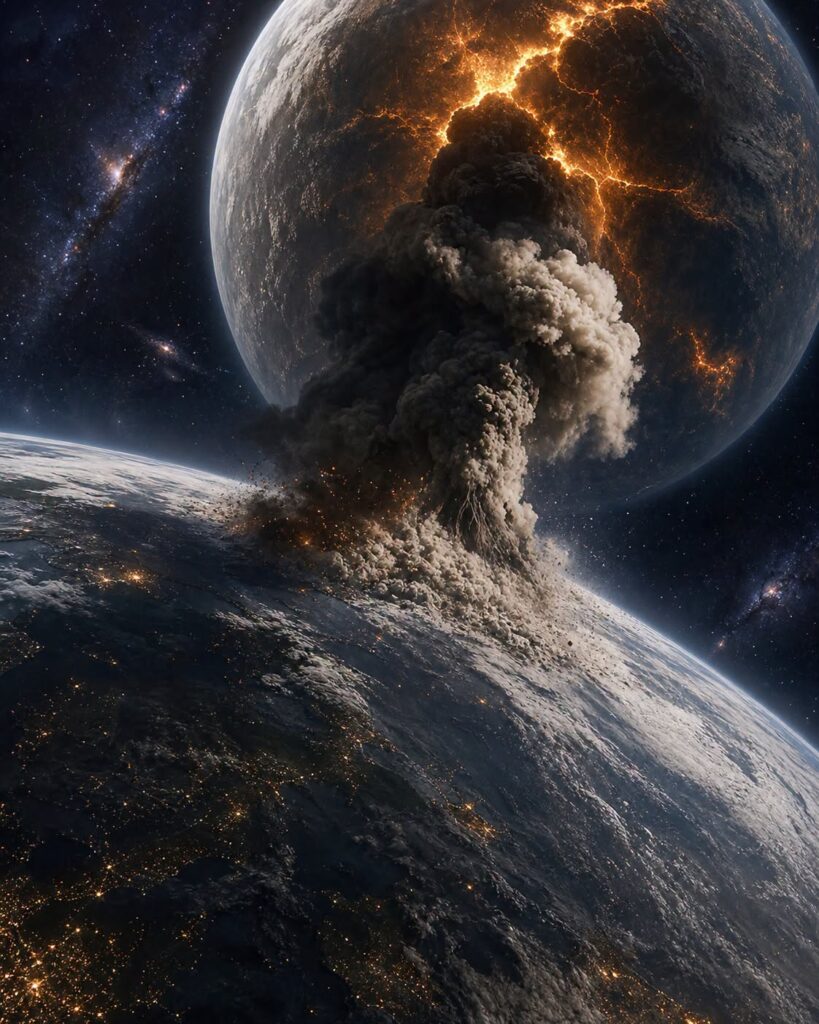
The truth didn’t explode into our lives. It slipped in quietly, disguised as routine data, cautious language, and calm scientific briefings. No sirens. No breaking news. Just a slow, unsettling shift from reassurance to unease as the numbers changed, the margins tightened, and the word “harmless” began to feel like a gamble we could no longer af…
We are, for once, spared. 52768 (1998 OR2) will not strike; it will glide past at a safe distance, a vast mountain of rock that will never touch our world. Yet its passage forces us to confront a fragile truth: survival is not guaranteed by luck alone. It is earned through vigilance, foresight, and the uncomfortable willingness to imagine disaster before it happens.
This asteroid becomes less an object in the sky than a mirror held up to us. It reveals how easily we are distracted by the noise of daily crises while a slower, quieter danger moves relentlessly on. The choice before us is stark. We can treat this encounter as a curious spectacle, soon forgotten, or as a final warning delivered without drama: prepare now, while we still have the luxury of time.