
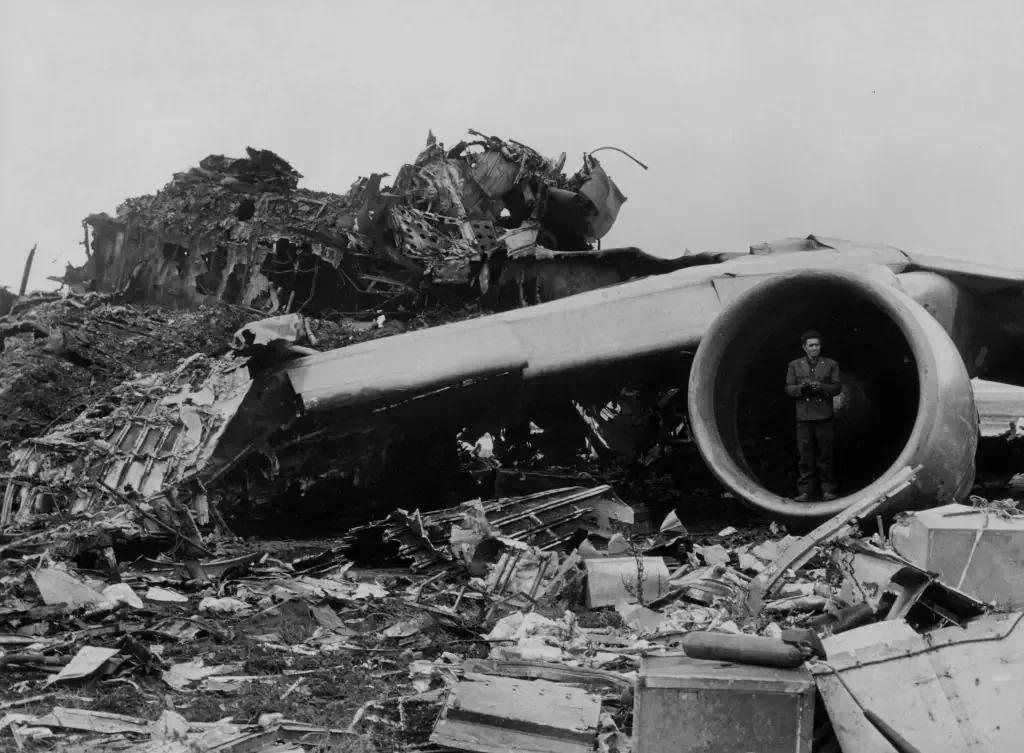
A horrific incident in 1977 remains one of the darkest events in aviation history. March 27, 1977, marks the anniversary of the deadliest air disaster ever recorded. The catastrophe claimed 583 lives and left 61 survivors when two Boeing 747 jumbo jets collided on a runway in Tenerife, Spain.
The disaster involved KLM Flight 4805 and Pan Am Flight 1736, which crashed at Los Rodeos Airport, now known as Tenerife North–Ciudad de La Laguna Airport, at 5:06PM GMT on March 27, 1977. In a cruel twist, neither aircraft had originally been scheduled to land there.
Both flights had been heading to Gran Canaria Airport in Las Palmas but were diverted after a bomb explosion at the airport earlier that day. Los Rodeos, one of the few nearby airports capable of handling Boeing 747 aircraft, suddenly found itself overwhelmed by diverted traffic.
A series of errors led to disaster
The small airport was not designed to cope with the volume of large aircraft that arrived following the diversion. Parking space was limited, operations became congested, and weather conditions deteriorated as thick fog rolled across the airfield.
KLM captain Jacob Veldhuyzen van Zanten was reportedly frustrated by the delays. The Dutch government had recently changed crew duty time regulations, and further hold-ups risked pushing the flight crew beyond their permitted working hours.
According to The Mirror US, van Zanten remarked: “I’ve seen postage stamps bigger than this place. Now we’re going to get boxed in here, goddammit.”
Van Zanten was one of KLM’s most senior figures, serving as the airline’s chief flight instructor and head of safety. His image even appeared in KLM advertising campaigns promoting punctuality.
The situation became even more complicated when the KLM aircraft was refuelled before departure. As dense fog reduced visibility, a fatal misunderstanding developed between the flight crews and air traffic control. Believing he had received take-off clearance, van Zanten accelerated down the runway while Pan Am Flight 1736 was still taxiing ahead.
The chilling final moments
The cockpit voice recorder recovered from the Pan Am aircraft captured the terrifying seconds before impact.
Pan Am captain Victor Grubbs reportedly spotted the approaching aircraft through the fog and exclaimed: “There he is!”
Moments later, as the KLM jet raced towards them at take-off speed, Grubbs shouted his final words: “There he is… look at him. Goddamn, that son-of-a-b**** is coming!”, while first officer Robert Bragg repeatedly yelled: “Get off! Get off! Get off!”
Grubbs attempted to avoid the collision by applying full power and steering sharply left towards the grass. However, there was not enough time. The KLM aircraft had already exceeded its V1 decision speed, meaning the pilots could no longer safely abort the take-off.
In a desperate attempt to clear the Pan Am jet, the KLM crew tried to lift off early. The manoeuvre resulted in a tailstrike, and although the aircraft briefly became airborne, it slammed into the upper section of the Pan Am plane, tearing through its fuselage and ripping off its tail.
How the crash changed aviation forever
The KLM aircraft continued for around 150 meters before crashing back to the ground and sliding hundreds more metres down the runway. Its fully fuelled tanks ignited on impact, creating a massive fireball that took hours to extinguish.
All 248 people aboard KLM Flight 4805 were killed. On the Pan Am aircraft, 335 of the 396 people on board lost their lives. The 61 survivors were all seated in the front section of the aircraft. Remarkably, all five occupants of the Pan Am cockpit survived.
The disaster prompted major changes across the aviation industry. Investigators concluded that miscommunication, assumptions, and poor visibility all played critical roles in the tragedy.
In the years that followed, international aviation authorities introduced stricter procedures for radio communication, requiring standardized English phraseology between pilots and air traffic controllers. Crew resource management practices were also strengthened, encouraging flight crew members to question and challenge captains when safety concerns arise.
Nearly five decades later, the Tenerife runway collision remains the deadliest accident in aviation history and continues to shape airline safety procedures around the world.